You searched for "otorhinolaryngolgists"
In conversation with Professor Paul J Donald
Prof Paul J Donald has recently stepped down as Chairman of the ORL-HN Department at UC Davis in Sacramento and is winding down to retirement. In this interview with Prof Pat Bradley, Prof Donald explains some of the highlights of...Targeting the microbiome in chronic rhinosinusitis
Researchers at St Paul’s Sinus Centre and UBC in Vancouver are testing a novel treatment for CRS: transferring mucus from a healthy donor into a patient’s sinuses. Chronic rhinosinusitis (CRS) is one of the most common diseases managed by otolaryngologists...Leadership: In conversation with Dr Joyce Aswani
In certain cultures, it is even more difficult for women to establish roles in leadership due to the pressures put upon them by society to take care of the home and family, often in lieu of furthering their education and...Leadership: in conversation with Dr Joyce Aswani
In certain cultures, it is even more difficult for women to establish roles in leadership due to the pressures put upon them by society to take care of the home and family, often in lieu of furthering their education and...Superior semicircular canal dehiscence: transmastoid obliteration
Sometimes patients with dizziness turn out to have slightly more unusual causes of their problem. Thomas Milner and Georgios Kontorinis describe their technique for managing patients who have a diagnosis of superior canal dehiscence as an identified cause of their...Incoming RSM Presidents share their plans for the year
Section of Laryngology & RhinologyMichael Kuo – PresidentVictoria Possamai – Honorary Secretary Another academic year for the RSM beckons. The programmes that Tim Woolford and Guri Sandhu presented, culminating in the first ‘face to face’ ENT meeting this year, both...TWJ Foundation Golden Jubilee
The TWJ Foundation celebrated its 50th anniversary this year. A black-tie dinner was held at the Apothecaries’ Hall in London on Friday 3 May, with the President, David Wright, in the chair. The evening brought together TWJ Trustees, some of our fellowship hosts, former fellows, donors and TWJ family members.
Microtia and Atresia – Combined Approach by Plastic and Otologic Surgery
In this textbook Kaga and Asato, both leading experts in otology and plastic surgery respectively, present over 10 years of their experience in joint reconstructive surgery for microtia and auricular atresia, combining autologous auricular reconstruction with external auricular canaloplasty and...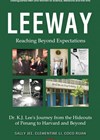
Leeway: Reaching Beyond Expectations
Leeway is a book that takes us through an 80-year journey of one man’s determination, ambition and unbelievable achievements. Prof KJ Lee, as he is known to many today, was born in Malaya in 1940. Ahchu, ‘sweet potato’ in Malaysian,...
LearnENT app – bringing otolaryngology to your mobile
www.learnent.ca ENT trainees, medical students, and audiologists take note: an app called LearnENT is about to bring the fundamentals of otolaryngology right to your fingertips. A team of otolaryngologists and medical residents at the University of Ottawa developed LearnENT as...