
You searched for "treatment"
The European School of Interdisciplinary Tinnitus
Scientific careers in tinnitus are expanding beyond any single discipline to embrace interdisciplinary collaboration and knowledge exchange. Natalia Trpchevska and Christopher R Cederroth present an overview of an innovative EU-funded training programme called the ‘European School of Interdisciplinary Tinnitus’, and...A multidisciplinary approach to the management of the adult balance - dizzy patient
Richard Gans and Kimberly Rutherford, renowned experts from The American Institute of Balance, give their team’s overview of the stages involved in reaching ‘diagnosis based strategies’. For the dizzy patient, this focuses on patient-centred clinical pathways for individualised therapy with...
Paediatric nasopharyngeal carcinoma
Between 11 and 18% of nasopharyngeal carcinomas (NPC) occur in the paediatric age group but there are no specific management guidelines for this age group. Tunisia is a region with an intermediate incidence of NPC, the authors studied 40 cases...Running a post-COVID smell clinic
Over the past year, much of our effort as a speciality has been directed towards crisis management and keeping services afloat. Our practice has changed in untold ways, but unprecedented numbers of patients with smell disorders will increasingly require our...
Transnasal endoscopic choanal atresia surgery
Surgery is currently the only definitive treatment for congenital choanal atresia (CCA). There are various surgical approaches including transnasal, transeptal or transpalatal. The authors propose that the preferred option is transnasal endoscopic choanal atresia surgery (TECAS) and set out to...Subjective tinnitus – adding mutebutton™ to your tinnitus toolbox
Neurophysiologic tinnitus or subjective tinnitus is typically a sound or a number of sounds that originate from the auditory nervous system. They are unwanted sounds that do not exist in the external environment. They can be heard in one or...
Maxillary osteotomy stability
This systematic review assesses inferior repositioning of the maxilla six months after surgery. Two articles were identified with a total of 22 patients. The repositioning was of a mean of 3.2 to 4.5mm anteriorly and 0.1 to 1.8mm posteriorly. Six...Chronic cough hypersensitivity syndrome
We all have patients who give us a ‘heartsink’ feeling; for many of us, the coughing patient is exactly such a situation. In this overview, Bhaskar Ram and Sangeeta Maini outline their approach to diagnosis. Declan Costello, Editor. Introduction Chronic...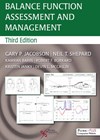
Balance Function Assessment and Management – Third Edition
Now in its third edition, this textbook provides an extensive amount of up-to-date information on the assessment and management of the vestibular system. Four new editors have been recruited for this edition and all chapters have been reviewed and reorganised...
Dupilumab prospective RCT for CRSwNP, a multinational trial of 60 patients with a 16-week CT follow-up
This transcontinental work describes a randomised, double blind, placebo controlled parallel group study over a 16-week period, assessing 60 patients with CRSwNP by CT scan scores. All patients had a four-week period of intranasal corticosteroids followed by randomisation to add...
Lost and sound: exploring hyperbaric oxygen therapy for refractory SSNHL
Can hyperbaric oxygen therapy (HBOT) offer a breakthrough for patients with refractory sudden sensorineural hearing loss (SSNHL)? SSNHL is defined as acute hearing loss of ≥30 decibels in three consecutive frequencies within three days. Typically, it’s treated with two weeks...


