You searched for "Asian"
36th World Congress of Audiology 2024
Ebru Zeren, Audiologist, Mid and South Essex University Hospitals GroupWhat a fast paced, thoroughly informative four days we had in Paris! This amazing event gathered professionals from across the globe, from Australia to Africa and from America to Europe, to...5th Annual Inner Ear Disorders Therapeutics Summit
Coined by industry as the only meeting of its kind and uniquely positioned to share fresh ideas and assess viable approaches to your most pressing preclinical, translational, and clinical bottlenecks, the 5th Inner Ear Disorders Summit returns as a forum to benchmark learnings from past failures, reignite momentum and develop investment into the audiology therapeutic landscape.15th Congress of the ELS
Emilie Dronkers, Consultant Laryngologist, Leiden University Medical Centre, the Netherlands Missed ELS 2025 in Warsaw? Oh, the Laryngological FOMO! Alright, fellow ENT enthusiasts, if you weren’t hobnobbing in Warsaw from May 8-10, 2025, at the ELS Congress, let me tell...19th Annual National ENT Masterclass®
Miss Eleanor Crossley, Association of Otolaryngologists in Training (AOT) President and ENT Registrar, South London DeaneryDoncaster Royal Infirmary was again the home of the 19th International ENT Masterclass in January 2025. The three-day programme was packed with sub-specialists and delegates...12th Dubai Otology
The Dubai Otology, Neurotology and Skull Base Surgery Conference 2024 was a remarkable gathering of otolaryngologists, ENT specialists, neurologists, audiologists, surgeons and medical device manufacturers.This event showcased cutting- edge research, advanced technologies and the latest surgical techniques in ear, neurotology,...ManCAD Research CAPers Conference
ManCAD's upcoming inaugural research conference has been playfully named ‘Research CAPers’ – as in Research Clinical Auditory Papers. This year’s conference highlighted the scientific accomplishments of Professor Dave Moore – who is retiring later this year from his various academic roles.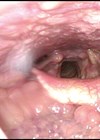
Virtual chromoendoscopy (VCE)
‘That’s a funny looking lesion on the larynx, it’s probably benign, but I should take a biopsy.’ Liz Ross and Ajith George discuss whether virtual chromoendoscopy will change this thought process. What are the origins and ENT applications? Traditional chromoendoscopy...