You searched for "wound"

3211 results found

How to identify and support adults with auditory processing disorder: a focus on low-gain devices and auditory training

Some adults struggle with hearing in noise despite normal audiograms. Tools like the HHIA, low-gain devices and auditory training can help identify and support these cases. In this article, Angela Alexander and Fatima Abbas use a case study to discuss...

Promoting human rights of deaf communities in low-resource settings

Stigma and misconceptions about deafness are serious impediments for many deaf people to realise rights and potential in some of the most challenging situations globally. Around 430 million people are estimated to live with moderate or higher levels of hearing...

Promoting human rights of deaf communities in low-resource settings

Stigma and misconceptions about deafness are serious impediments for many deaf people to realise rights and potential in some of the most challenging situations globally. Around 430 million people are estimated to live with moderate or higher levels of hearing...

Audiology in this issue... Paediatric Audiology Gamechangers (NovDec18)

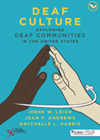
Fifty years ago, the National Conference on Education of the Deaf followed up on the Babbidge Report of 1965, recognising the failure of oralism in deaf education. Because young, deaf children at that time did not have access to sound, they could not develop speech and language. Further, because children were identified at two years or later, early intervention was only a dream.

Down with the nose, down with it flat

In Shakespeare’s Timon of Athens, Timon urges prostitutes to spread syphilis throughout Athens. He implores the whores, Phrynia and Timandra, to: Consumptions* sow In hollow bones of man; strike their sharp shins,And mar men’s spurring*. Crack the lawyer’s voice**, That...

Speech mapping and the benefits of using in clinical practice

Fitting hearing aids is not simply a case of one size fits all. Nicole da Rocha discusses the benefits of using speech mapping as a verification tool. The verification of hearing aids has become quintessential for best practice. Using either...

The ups and downs of overseas research – the inner ear at altitude

Conducting research at extreme altitude presents unique challenges. This study of the inner ear at 5350m navigates setbacks in a quest for scientific discovery. Having completed a diploma in mountain medicine in my foundation years, I decided to undertake a...

What is voice?

Voice is an area of clinical practice in speech and language therapy where there remains much debate, not only around the aetiology and classifications of voice disorders, but around the treatment of them. In general, it is accepted that ‘voice...

In conversation with Reza Rahbar

Reza Rahbar is professor of otolaryngology at Harvard Medical School and associate otolaryngologist-in-chief at Boston Children’s Hospital. He initiated and leads IPOG, the International Pediatric Otolaryngology Group. I met up with him to ask more about it. Reza Rahbar DMD,...

New distribution partner in Egypt

ENT & Audiology News is delighted to welcome on board Egypt Opera International Group as its new distribution partner. The company will be providing free print copies of each issue of the magazine to members of the ENT and hearing care professions in Egypt.

From Listening to Language: Comprehensive Intervention to Maximise Learning for Children and Adults with Hearing Loss

How does one build a two-storey house? Start with a firm foundation, followed by a strong structure. Only then can the floors and attic be added. Madell and Hewitt provide practitioners with this same blueprint to facilitate optimal outcomes for...

Directional microphones and speech

This study aimed to research how speech recognition, listening effort and localisation depends on hearing aids’ microphone configuration in people with moderate to severe hearing losses. Eighteen participants with sensorineural, symmetrical, moderate to severe hearing loss were tested. Participants were...