You searched for "otological"
GORD and CRS – is there an association?
This international collaboration assessed 32 papers which had published original data on the experimental, diagnostic, treatment or prognostic association between GORD and CRS. The study aims to systematically review the evidence for a role of GORD in CRS. Case control,...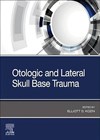
Otologic and Lateral Skull Base Trauma
Otologic and Lateral Skull Base Trauma is a unique textbook that offers the reader a detailed yet efficient overview of all manner of complications following lateral skull base trauma. Whilst the content focuses primarily on neurotological injury, pertinently, it also...Sir Terence Edward Cawthorne (1902-1970): first Chairman of the BACO Academic Committee
Sir Terence Cawthorne was the chairman of the academic committee of the first BACO in 1963, and was Master of the second BACO in 1967. In this article, Neil Weir describes the life and career of one of the UK’s...
Middle ear pressures with different anaesthetic agents
The use of appropriate anaesthetic agents is essential to avoid complications during middle ear surgery. This Turkish study attempted to identify whether intravenous (IV) anaesthetics (propofol) or inhalational agents (sevoflurane) cause more variations in middle ear pressures. The authors performed...
Evidence for balloon eustachian tuboplasty
Balloon eustachian tuboplasty is an emerging intervention aimed at the management of eustachian tube dysfunction (ETD) and its sequelae. The authors acknowledge that ETD is a common but frequently ill-defined problem, with no well-established direct treatment. They performed a systematic...
The applicability and reliability of SHIMP, a new vestibular test, in adolescents
The video head impulse (now called the head impulse paradigm – HIMP) is now a routine test battery in neuro-otological practice. Few will be familiar with the new suppression head impulse paradigm (SHIMP) test. The key difference is that, in...
Understanding osseointegration for the otologist
Bone conduction implants are hearing devices that require osseointegration to create a stable and reliable interface between the hearing device and the skull to deliver sound to the cochlea. This article reviews the physiology of osseointegration, factors that may lead...Branchio Oto Renal syndrome
Branchio Oto Renal Syndrome (BOR) is an autosomal dominant disorder with branchial, otologic and renal manifestations. The presence of clinical signs varies among and within affected families. Three causative genes for BOR syndrome have been reported thus far: EYA1, SIX1...
Is clinical HIT as good as vHIT in the emergency room?
Establishing the cause of acute vestibular syndrome (AVS) is critical in the first few hours of presentation in the emergency department. The first question to ask is, “is it due to a peripheral vestibular pathology or a stroke?” This is...