You searched for "lesions"
Frederik Dikkers: championing change in laryngology
Prof Dikkers shares the details of his journey into ENT surgery, his dedication to treating laryngeal papillomatosis, and his pioneering advancements in button battery safety. Recurrent respiratory papillomatosis (RRP) is one of the most frustrating conditions managed by laryngologists. There...Triple semicircular canal occlusion and Meniere’s disease: a rising alternative treatment?
Patients with dizziness form a large part of the workload for ENT surgeons. In the overwhelming majority of cases, management will be medical and successful. However, occasionally some patients present a challenge when they have not responded to conventional treatments....Frederik Dikkers: championing change in laryngology
Prof Dikkers shares the details of his journey into ENT surgery, his dedication to treating laryngeal papillomatosis, and his pioneering advancements in button battery safety. Recurrent respiratory papillomatosis (RRP) is one of the most frustrating conditions managed by laryngologists. There...Elasticated retraction in head and neck surgery – a trainee’s perspective
The effectiveness of surgical technique and satisfactory outcome is greatly dependent on good surgical exposure. Retraction requires adequate traction and counter-traction of tissues in order to expose the tissue or organ under scrutiny for the surgeon. This is a universal...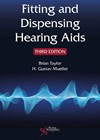
Fitting and Dispensing Hearing Aids – Third Edition
Fitting and Dispensing Hearing Aids – Third Edition is intended primarily as a course book for “non‑audiologists or undergraduate audiology students who have yet to fit their first pair of hearing aids”. It is aimed primarily at students in the...
A global view of thyroid surgery practices
The incidence of thyroid cancer continues to increase, and both surgery for benign and malignant disease carries an important and persistent incidence of perioperative complications. This paper reports the results of an electronic survey sent to members of seven surgical...
Preoperative imaging for thyroid cancer according to 2015 ATA guidelines
The 2015 American Thyroid Association (ATA) management guidelines for adult patients with thyroid nodules and differentiated thyroid cancer suggest that thyroid sonography with survey of the cervical lymph nodes should be performed in all patients with known or suspected thyroid...
Clinical value of 3 T magnetic resonance imaging after intratympanic gadolinium injection in cases of delayed endolymphatic hydrops
Recurrent vertigo can continue after severe unilateral or bilateral hearing loss. This is a condition similar to Ménière’s disease, the diagnosis of which can be difficult. In this study intratympanic injection of gadolinium-diethylenetriamine penta-acetic acid dimeglumine was done in 25...
Which cross-over frequency is best for electro-acoustic stimulation?
Advances in technology and improved soft surgical techniques have led to individuals with better hearing thresholds, especially at the low frequencies, becoming candidates for cochlear implants (CI). Surgeons are more confident that residual hearing can be preserved thus making those...
People with language-led dementia in India
Primary Progressive Aphasia (PPA) is a language led dementia characterised by slowly worsening speech and language. It is associated with atrophy of the dominant temporal-parietal lobe regions and is commonly caused by frontotemporal or Alzheimer’s pathologies. There are three PPA...