You searched for "testing"
Anaesthesia for free-flap surgery
Adel Hutchinson is one of those calm and controlled anaesthetists for whom nothing seems too difficult. In this article, she describes the key perioperative factors for one of the highest complexity operations in ENT; free-flap surgery. It makes good reading...
Modifying two-week wait protocol for suspected head and neck cancer patients during COVID-19
As healthcare workers, we are committed to ensuring that our patients continue to receive the optimum care that we are set up to deliver. However, the last year has shown that we need to be mindful of balancing this with...
Counseling-Infused Audiologic Care – 4th edition
This book is highly engaging, with a well-structured format that includes clear subheadings to support ease of reading. The book is up to date and excellent value for money. It offers relevant content that reflects current practice. Case study examples...New international collaboration: Young Otolaryngologists of IFOS – ‘YO-IFOS’
The Young Otolaryngologists of IFOS, founded in Paris in 2017, has an ambition to fulfil four key missions at an international level: education, research, networking and congress-related activities. Kate Stephenson tells us more about this exciting initiative. During the recent...
Commercial desiccants or uncooked rice?
Moisture can damage any electronic devices including hearing aids. It is commonly known that rice can ‘rescue’ an electronic device if wetted. Authors of the below-described study researched whether uncooked rice could be used as an efficient equivalent to often...AURITEC launches new audiometry platform AT2000 into European market
AURITEC, Germany’s technology leader in clinical audiometry, is thrilled to present the new audiometry platform with the multichannel audiometer AT2000.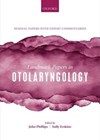
Landmark Papers in Otolaryngology
“It is the supreme art of the teacher to awaken joy in creative expression and knowledge” says Peter Rea in his foreword to this book. He is quoting Albert Einstein, of course, and also introducing this book with a delightfully..."A merry road, a mazy road, and such as we did tread, The night we went to Birmingham by way of Beachy Head"
It’s true, the UK’s premier ENT event has come around quickly this time. So, who better to ‘poke awake’ for an article on the ethos and culture of Birmingham UK, BACO 2020 venue, than the erudite Chris Potter, who’s been...
Grading dysphagia as a toxicity in treating head and neck cancer
Common Terminology Criteria for Adverse Events (CTCAE) is a system used by clinicians to grade the toxicity of oncology treatments in a standardised manner. Dysphagia is perhaps the most common long-term toxicity of head and neck cancer treatment. Currently, a...Promoting human rights of deaf communities in low-resource settings
Stigma and misconceptions about deafness are serious impediments for many deaf people to realise rights and potential in some of the most challenging situations globally. Around 430 million people are estimated to live with moderate or higher levels of hearing...Promoting human rights of deaf communities in low-resource settings
Stigma and misconceptions about deafness are serious impediments for many deaf people to realise rights and potential in some of the most challenging situations globally. Around 430 million people are estimated to live with moderate or higher levels of hearing...