
You searched for "anaesthetist"

Marginal gains
Many consider facial nerve monitoring compulsory in parotid surgery yet few do the same for the marginal mandibular nerve in a submandibular approach, even though the nerve is finer and more difficult to identify. Here a group map the nerve...Awake transnasal laryngeal and pharyngeal biopsy in the unsedated patient
In an attempt to improve the efficiency and flow of patients through a busy ENT clinic, technology now allows the ENT surgeon to consider biopsies in the outpatient setting on a more regular and controlled basis. This can avoid the...Professor Ray Clarke retires from NHS
At the end of May 2022, former ENT & Audiology News editor, Professor Ray Clarke, retired from NHS work. Despite his exhortations for ‘no fuss,’ colleagues and friends at Alder Hey Children’s Hospital, Liverpool, UK, where he worked as Consultant...
Tonsillectomy in or out?
Although tonsillectomy is the most common surgical act performed in ENT practice, there is still some concern about the safety of outpatient or day surgery scheduling, especially in adults. Although this has been common practice in many departments for some...
Surgical variations in maxillomandibular surgery treating sleep apnoea
This is a scoping review further highlighting the success in curing sleep apnoea with a maxillomandibular complex advancement. The variations outlined are on East and Southeast Asian patients to reduce the aesthetic concern of bi-maxillary protrusion when large advancements are...What is Transnasal Humidified Rapid-Insufflation Ventilatory Exchange (THRIVE)?
THRIVE is a physiological mechanism for oxygenating and ventilating patients who are under general anaesthesia and who have diminished or absent respiratory effort [1]. Classical ventilation requires bulk flow of gases into and out of the lungs driven by chest...Interview with Mr Vasant Oswal, Emeritus Consultant ENT H&N Surgeon
British Medical Laser Association (BMLA) held its 39th annual conference, the first in-person gathering following the COVID-19 pandemic, in the academic surrounding of the Surgeons’ Quarters of the Royal College of Surgeons in Edinburgh. Chris Henson caught up with 87-year-old...
Blindness after orthognathic surgery
This is a case report and review of the literature of this rare, but well recognised alarming complication. The authors discuss the possible mechanisms, suggesting that it does not arise from a direct injury to the optic nerve and is...Endoscopic stapes surgery
Traditionally middle ear surgery, including stapes surgery, has been performed using the operating microscope. In this article the authors describe their experience with endoscopic middle surgery and share some of its advantages. Trans-canal endoscopic ear surgery (TEES) is now a...History of innovation in ENT
Innovation seems to have been in the strapline of every meeting, conference and course for the last few years. You would be forgiven for thinking it is a new a concept, but as Neil Weir beautifully details, innovation has been...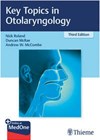
Key topics in Otolaryngology – Third Edition
Eighteen years after the second edition of Key Topics in Otolaryngology, Nick Roland and his co-editors have published the long-awaited third edition. This concise book has been the friend of the examinee for the last two decades within UK and...


