You searched for "symptoms"
In conversation with Prof Metin Önerci
Prof Valerie Lund caught up with friend and colleague, Prof Dr Metin Önerci, to discuss his various positions in rhinology, the FOAM programme with which he is involved, and rhinology in Turkey and the Balkan and the Central Asian region....Task shifting in public hospital rhinology new patient assessment
Nurse-led rhinology clinics and CBCT imaging streamline assessment, improve equity and expand capacity in a resource-constrained public hospital setting. In the ENT department at Waikato Hospital, New Zealand, we have faced problems that are no doubt well known to many...The art and science of acoustic ecology
Aki Pasoulas summarises the diverse forms and approaches of the relatively new and expanding area of acoustic ecology, a discipline that studies the relationship between living beings and their sonic environment. Sound Ecology emerged in the late 1960s through the...A binaural detection task that reveals deficits in listeners having ‘slight’ or ‘hidden’ hearing loss
The association of degraded binaural processing in adults with clinically defined ‘slight’ or ‘hidden’ high frequency hearing loss is of great interest to clinicians if it can be measured. Leslie R Bernstein and Constantine Trahiotis share their findings in measurements...Dysphagia
Natalie Watson, MBBS, MA, FRCS (ORL-HNS), Consultant ENT Surgeon Specialising in Laryngology, Guy’s and St Thomas’ NHS Foundation Trust, UK. nataliewatsonent@gmail.com@surgeonsinger Guest Section Editor The function of swallowing is one third of the triad of laryngology. Dysphagia describes difficulty swallowing...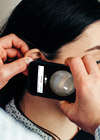
Connecting healthcare
In recent years, there has been a definite shift toward the acceptance and use of smartphone technology in the delivery of healthcare. Within the fields of ENT and audiology, there is considerable appeal in the portability, simplicity, affordability, and connectivity...