
You searched for "stent"
ENT and the Titanic
One otolaryngologist who perished on the ill-fated voyage of the RMS Titanic on 15 April 1912 was Dr Ernest Moraweck, a prominent physician with an interest in ENT (and ophthalmology), living in Frankfort, Kentucky, USA [1]. Moraweck was an inventive...Sir Terence Edward Cawthorne (1902-1970): first Chairman of the BACO Academic Committee
Sir Terence Cawthorne was the chairman of the academic committee of the first BACO in 1963, and was Master of the second BACO in 1967. In this article, Neil Weir describes the life and career of one of the UK’s...Effects of blast and acoustic trauma: assessment of hearing status on war veterans
Introduction Acoustical conditions of the military are often dangerous and there is a real risk of blast trauma and acoustic trauma [1, 2]. Levels of military noises maybe reach up to 125 dBA [3]. Weapons produce instant shock waves (10μs)...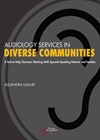
Audiology Services in Diverse Communities: A Tool to Help Clinicians Working With Spanish-Speaking Patients and Families
As a bilingual audiologist (Spanish-English), I have found this book to be a bridge between the two languages in the audiological world. It is a resourceful niched book that enables the practising audiologist dealing with Spanish-speaking adult and paediatric patients...
Learning curve for sialendoscopy
Sialendoscopy represents a minimally invasive technique that permits direct salivary tree visualisation and treatment using endoscopic techniques. Previous studies have shown that it is an efficacious, safe and potentially gland preserving method to treat major salivary gland disease. However, it...
Head and Neck: Dissection and Reconstruction Manual
The ‘Head and Neck Dissection and Reconstruction Manual’ is compiled by the Chinese University of Hong Kong (CUHK) Head and Neck Course faculty and edited by Professor A Van Hasselt and E Wong. The Manual is specifically aimed at ENT...Aboriginal and Torres Strait Islander ear health in the 2020s
The world is in the midst of a pandemic, and global health is severely threatened by this novel coronavirus which has caused over three million infections of COVID-19 and claimed more than 228,000 lives to date*. Societies and health systems...Monkey business
Professor Sir Donald Harrison (DFNH) had a strong interest in comparative anatomy of the larynx, which was supported by a close relationship with the London Zoo who provided specimens from any mammals in the collection that died and had undergone...Are today’s implantable hearing devices better than conventional devices for patients with conductive and mixed hearing loss?
In March 2014, we published a paper in ENT & Audiology News, with a similar title. Below, an updated overview is presented of available devices (early 2021) for patients with conductive/mixed hearing loss. The focus is on effectiveness. Patients with...A ‘Quiet Night Out’ for Tinnitus Week 2026
Tinnitus UK has announced a unique evening of music, spoken word and comedy designed with safe listening at its core. Taking place at London’s iconic Union Chapel on Thursday 5 February, the event will raise awareness during Tinnitus Week 2026 and champion the importance of hearing health.Transferable skills in audiology: one audiologist’s journey
Ever wonder about transferable skills in audiological practice? In this issue, we hear about one audiologist’s journey from clinical practice to applying transferable skills gained in audiology to other healthcare sectors. In 1997, as a 16-year-old starting my career in...


