
You searched for "funding"

Reduction in recurrent cholesteatoma rates with bony obliteration tympanoplasty technique
This large retrospective study from the Erasmus Medical Centre in Rotterdam compares outcomes in traditional canal wall up (CWU) and canal wall down (CWD +/- partial obliteration of mastoid bowl) mastoid surgery for cholesteatoma with bony obliteration tympanoplasty (BOT, which...
REVISIONS acronym for preoperative imaging review in revision endoscopic sinus surgery
The authors have developed an acronym to aid evaluation of preoperative sinus CT imaging in revision endoscopic sinus surgery (RESS). To determine which pertinent aspects of anatomy to include, a systemic review of studies that investigated anatomic contributions to persistent...
To question or not to question
Misophonia is a complex condition in which individuals experience a strong negative emotional response to specific sounds, such as chewing, breathing, swallowing or foot tapping. These reactions are not primarily determined by the volume of the sound. Although relatively few...History of innovation in ENT
Innovation seems to have been in the strapline of every meeting, conference and course for the last few years. You would be forgiven for thinking it is a new a concept, but as Neil Weir beautifully details, innovation has been...ENT registrar national selection: how can we advise aspiring candidates?
With the aim of creating fair selection into the few available training numbers, ENT was one of the first surgical specialties to move to a national selection process for selecting new registrars in England. Since 2013 the selection process has...Audiology in this issue... Paediatric Audiology Gamechangers (NovDec18)
Fifty years ago, the National Conference on Education of the Deaf followed up on the Babbidge Report of 1965, recognising the failure of oralism in deaf education. Because young, deaf children at that time did not have access to sound, they could not develop speech and language. Further, because children were identified at two years or later, early intervention was only a dream.Random-pattern skin flaps: part 4 - transposition flaps
In the final part of our series on local skin flaps (see Part 1, Part 2 and Part 3) in ENT, the authors describe the usefulness of the transposition-type flap and highlight some examples. Rotational advancement flap Useful for defects...INTEGRATE: Uniting collaborative research in ENT
Exposure to clinical research as a trainee is often sporadic and unstructured, despite it featuring in both the GMC’s Good Medical Practice and the ISCP’s syllabus for all surgical specialities, including otolaryngology [1,2]. The majority of trainees undertake small-scale research...History of ESPO
Martin Bailey, Secretary-General of ESPO, narrates the story of a society which has promoted and supported the development of paediatric otolaryngology in Europe. In the early 1950s, pioneers in paediatric otorhinolaryngology became active in European countries such as Poland, Hungary,...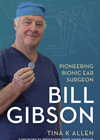
Bill Gibson: Pioneering Bionic Ear Surgeon
Professor Bill Gibson is one of the great pioneers of inner ear surgery and the recent publication of his biography is a reflection of his remarkable life and career. Bill Gibson: Pioneering Bionic Ear Surgeon will be enjoyed by everyone...In conversation with Nash Patil and Gerry O’Donoghue
In celebration of Nash Patil’s inauguration as President of the Irish Otolaryngology Society (IOS), we dropped by to ask him a few questions, along with Gerry O’Donoghue, BACO 2020 Master. We’re particularly pleased to hear that Nash is looking forward...


