You searched for "blockage"
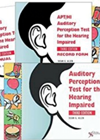
A Guidebook for the Auditory Perception Test for the Hearing Impaired
The Auditory Perception Test for Hearing Impaired (APTHI) assesses functional auditory skills that are the building blocks for language and academic development. The test is aimed at children with at least a moderate-to-severe hearing loss, aged three and over, but...
Allergy and the ear
Allergic disease is commonly associated with asthma, eczema and rhinosinusitis. The authors reviewed possible associations between allergy and otologic diseases. The authors first explored the possible association between allergy with otitis media with effusion (OME) and found the majority of...The effects of polypharmacy in the elderly
Another pill to cure the ill? Alec Lapira discusses the warning signs of polypharmacy in the elderly population. Polypharmacy in the elderly Polypharmacy – defined as the use of five or more medications – occurs in 20–37% of older people...Simulation: human factors scenario training
It is said that surgical training has suffered as a result of a combination of factors – through the introduction of work time restrictions such as the European Working Time Directive (EWTD) [1], a limit on the number of years...
Surgery for hypopharyngeal obstruction causing OSA
Surgical treatments for OSA are evolving with improved diagnostic accuracy of the level(s) involved. Where the collapsing segment lies below the soft palate, a variety of surgical techniques to correct the affected segment(s) are emerging. This article concentrates on one...
Learning from reimplantation
The Irish implant centre in Dublin undertook a retrospective study of their reimplantation cases to look at what lessons could be learnt. Device failures fall into two classes: hard and soft failures. Hard failures are implant malfunction or altered performance....Join the Oto Partner Programme and deliver effective tinnitus treatment today
Oto provides a digitally enabled pathway that provides personal and evidence-based care to those with tinnitus.
Do endonasal approaches for meningiomas have more CSF leaks?
Rarely, patients presenting to the ENT surgeon with anosmia may have an anterior skull base neoplasm such as a meningioma. Historically, the traditional approaches have focused on several transcranial, external routes, including the pterional craniotomy, and the subfrontal craniotomy. The...
Olfactory neuronal damage in sinusitis
So many patients with nasal disorders have poor olfactory function, yet sometimes the nose may seem comparatively clear of conductive problems. This study postulated that neuronal damage in the olfactory apparatus would lead to a leakage of neuron specific enolase...
Tricky post-laryngectomy swallows
Despite improvements in chemoradiation therapy and the adoption of organ preservation for some head and neck cancers, total laryngectomy remains the treatment often providing best survival chances for advanced laryngeal cancer. This article reviews the causes of dysphagia post-laryngectomy and...
Centralisation of care for acoustic tumour surgeries?
Several factors are responsible for readmission after acoustic tumour removal. The authors retrospectively studied the association between hospital, patient and insurance factors with the rate of readmission following acoustic tumour removal in the United States using the Nationwide Readmission Database...