You searched for "device"
Towards AI-assisted RF hearing aids
The development of effective hearing-assistive devices is essential as the prevalence of deafness grows with an ageing population. Where can AI support speech understanding? A team from the University of Glasgow discusses how lip‑reading hearing aids could be the future....BAA Annual Conference 2025
Lucy Mills and Yasmin Yuztas, Mid and South Essex Foundation Trust We had the pleasure of attending the 21st Annual BAA Conference at the Telford International Conference Centre. This was our first time at the event and anticipation was high...Pioneering in simulation surgery
Plastic temporal bones transformed ear surgery training, letting trainees practise complex procedures safely before operating on patients. I attended the Stell and Maran’s surgical course in the early 70s. It was superb but, with the confidence of naivety, I thought...Modernising scientific careers and audiology in the United Kingdom
Modernising Scientific Careers (MSC) is an education and training strategy for 51 disciplines in healthcare science within the National Health Service (NHS) in the United Kingdom (UK). Some of these disciplines lacked clear training routes as well as registration opportunities...Can we prevent chronic rhinosinusitis?
The old adage ‘prevention is better than cure’ is considered by Professor Hopkins in respect to chronic rhinosinusitis, a condition affecting around 10% of the adult population and associated with huge impact on quality of life and economic cost. A...European power women in otolaryngology: a focus on Laura Viani, Ireland’s first female otolaryngologist
Professor Laura Viani is a Consultant Otolaryngologist at Beaumont Hospital and Temple Street University Children’s Hospital and has been a member of Council of the Royal College of Surgeons of Ireland for the last 17 years. As the first female...Ear wax removal: should anyone and everyone perform it?
Earwax removal is a controversial and much-debated issue in audiology. Risks and public safety call for reforms, sparking discussion on professional standards. Earwax is a natural secretion produced by the ear. It is an amalgamation of desquamous epithelial skin cells,...Job Ahead: understanding the business and financial aspects of US practice
Dr Christiansen brings over 30 years of experience as a practising otolaryngologist both in private practice and in academic medicine as Associate Professor of Clinical Otolaryngology at the University of Missouri School of Medicine. Dr Christiansen started his career in...The challenge of disrupting the hearing care market in the USA
Barry Freeman, an Audiology Consultant of extensive global experience, examines the business model of hearing care service delivery in America. He discusses the challenges the profession has faced, and proposes some food for thought on learning from other health care...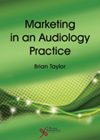
Marketing in an Audiology Practice
“This is not, I repeat, not, a marketing textbook.” A strange, if somewhat bemusing opening to a book with the word ‘Marketing’ firmly placed in its title. The author then goes on to explain why it is not a marketing...2020 Nikhil J. Bhatt, MD International Public Service Award
Professor Shahed Quraishi is the recipient of the 2020 Nikhil J. Bhatt, MD International Public Service Award.