You searched for "Nasal"
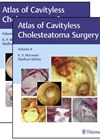
The Atlas of Cavityless Cholesteatoma Surgery: Volume I and II
The Atlas of Cavityless Cholesteatoma Surgery draws upon four decades of the authors’ experiences, based in the Jindal Institute in North India. Their aim is to showcase the inside out technique with obliteration of created mastoid cavities; and for the...
Ontogenies of Otology – Vol 1: Anatomy
Whilst there are few who are actively involved in the historical aspects of otology, there always seems to be great interest whenever I introduce the quirks of history into any of my talks. This book, I suspect, will very much...
Can we tell the difference between benign recurrent vertigo, migraine and Menière’s disease?
I chose to review this article as it reminds us of the difficulties in diagnosing dizzy patients accurately and the significant crossover of symptoms between the diagnoses. Does Benign Recurrent Vertigo (BRV) even exist as a separate entity? BRV is...
Complication rates for grommet insertion in H&N cancer patients
Otitis Media (OM) can be the direct result of H&N malignancy itself or secondary to treatment of malignancy. Both surgery and radiotherapy can cause lasting changes to the physiologic function of the ET, middle ear, tympanic membrane and ear canal....
The middle way: treating idiopathic facial nerve palsy
Whilst the causes of recurrent facial nerve palsy are numerous, in many cases it may be idiopathic. There is no clear consensus on treatment of this condition and conservative management alone may condemn patients to gradually worsening facial nerve function...
Otolith dysfunction in congenitally deaf adults
This paper helps to further define the profile of ocular and cervical vestibular-evoked myogenic potentials (o and c VEMPs) in patients with congenital profound sensorineural hearing loss (PSHL). It highlights the prevalence of otolith (saccular and utricular) dysfunction that exists...
When should we decompress the facial nerve in Bell’s Palsy?
It has been over three decades since Fisch popularised facial nerve (FN) decompression for Bell’s Palsy. Studies further exploring this have been few since, partly due to the major complications that can occur following this type of surgery. The current...
Management of necrotising otitis externa
Although uncommon, necrotising (previously malignant) otitis externa (nOE) can be very aggressive, particularly if not managed appropriately. In this study the authors perform a retrospective review of 25 patients admitted with nOE over a four year period at a tertiary...
Treating middle ear conditions in developing countries
This month’s journal issue discussed global health in otolaryngology with this paper focusing on the management of chronic middle ear disease in the developing world. Chronic suppurative otitis media (CSOM) is more common in developing countries. The reason for this...
‘Dead ear’ after mastoid surgery
The primary aim of surgery in the management of cholesteatoma is eradication of the disease which can potentially result in serious complications such as intracranial extension, facial nerve weakness and further hearing loss. A profound hearing loss resulting postoperatively considerably...
How has management and outcomes of necrotising otitis externa changed over the past decade?
Necrotising otitis externa (NOE) remains a challenging condition for ENT departments, particularly with the increased prevalence of diabetes mellitus (DM) in the general population. There is no international consensus on treatment, although many institutions now have local guidelines drawn up...