You searched for "bone"
INTEGRATE: Uniting collaborative research in ENT
Exposure to clinical research as a trainee is often sporadic and unstructured, despite it featuring in both the GMC’s Good Medical Practice and the ISCP’s syllabus for all surgical specialities, including otolaryngology [1,2]. The majority of trainees undertake small-scale research...Evidence-based hospital management of epistaxis
Epistaxis is the most common presentation to acute ENT services in the UK. However, there are currently no nationally accepted guidelines for its management. The British Rhinological Society, ENT UK and INTEGRATE (The National ENT Trainee Research Network) are working...Young ESPO – looking back and looking ahead
In 2018, after the virtual ESPO Marseille meeting, a new committee of ESPO Juniors was established. Last year, the name was changed to Young ESPO.
Hearing Conservation: In Occupational, Recreational, Educational, and Home Settings (1st edition)
Hearing Conservation was released in September 2011 by Vishakha Rawool, Professor of Audiology at West Virginia University. The book is intended for audiologists, researchers and graduate level students, as well as other professionals working in the fields of hearing conservation...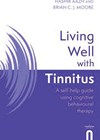
Living Well with Tinnitus: A self-help guide using cognitive behavioural therapy
Living Well With Tinnitus is part of the Overcoming / Living Well series of self-help books, aimed at directly addressing the population afflicted with the titular condition. It runs at 335 pages in paperback format and, at its core, guides...
Stimulation for tinnitus
Tinnitus is known to be inhibited by stimulation of the auditory system by stimuli such as acoustical, electrical and magnetic. Residual inhibition (RI) is when tinnitus is temporarily eliminated for a period of time lasting seconds, minutes, up to hours...
Is there a role for facial nerve decompression in Ramsay Hunt syndrome?
This is an interesting paper. The authors recommend a transmastoid facial decompression for patients with complete facial nerve paralysis with House Brackman HB 5/6 who do not show any sign of recovery after two weeks of treatment following a diagnosis...
Surgical outcomes of myringoplasty using platelet-rich plasma
Tympanic membrane (TM) perforations can affect people’s quality of life due to recurrent infections. Management is often by surgical repair. In this study, the authors investigated the outcomes of a minimally invasive approach of patch myringoplasty using an atelocollagen sponge...
Postoperative ultrasound surveillance in patients undergoing hemithyroidectomy
Hemithyroidectomy, as opposed to total thyroidectomy with radioiodine remnant ablation, is now increasingly undertaken for low-risk, differentiated thyroid cancer. If on histology, this proves ‘high risk’, completion thyroidectomy is done fairly soon. In this retrospective study, a total of 105...