You searched for "implantation"
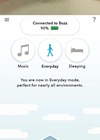
Neosensory Buzz: can a wristband really help with sound awareness and tinnitus?
As an audiologist, I am always looking for alternative and innovative solutions for patients who have tried all other traditional approaches. What else can I offer to patients who struggle to hear, even with appropriate amplification, or those who struggle...The use of a tactical throat mic guitar amp system to improve communication in theatre in the COVID era
During the COVID-19 (SARS-CoV2) pandemic, current guidelines dictate that surgical teams wear appropriate personal protective equipment (PPE) in theatre. Currently this is, at a minimum, an FFP3 respirator, a visor, fluid repellent gown and gloves [1]. Many surgeons, particularly in...9th International Pediatric Audiology Conference
A Sound Foundation Through Early Amplification This conference will be held in-person in San Diego, California, with live stream available for online participation. Sponsored by Phonak, the conference is chaired by Professor Anne Marie Tharpe and Dr Marlene Bagatto. The...Lyric 24/7 hearing: could it help those with tinnitus?
About Lyric Hearing Since its launch in 2008, Lyric represents the first and only device of its kind establishing a new category of hearing solution: 24/7 extended wear. Lyric is placed several millimetres within the ear canal, near the tympanic...Tonsillitis and tonsillectomies: where do we go from Paradise?
Landmark Paper: Paradise JL, Bluestone CD, Bachman RZ, et al. Efficacy of tonsillectomy for recurrent throat infection in severely affected children – results of parallel randomized and nonrandomized clinical trials. N Engl J Med 1984;310(11):674-83. The Paradise paper on tonsillectomy...Illuminating ear education: building interactive models to enhance inner ear understanding
Understanding the anatomy and function of the inner ear, particularly the vestibular apparatus and cochlea, is fundamental to audiology and otolaryngology education. However, the complex geometry and intricate functional relationships of these structures challenge us to find clear ways to...Old age is hard to swallow
This article takes us through the diagnosis and management of swallowing problems common in older age. As our global population continues to grow and live longer, dysphagia will continue to be a global problem which needs to be recognised, understood...Operating room fires in head and neck surgery: risk factors, prevention and management
Could your next head and neck surgery spark a fire? BACO 2026 paediatric keynote speaker, Soham Roy, explains how understanding risk factors and prevention is key to patient and OR team safety. Operating room fires are an uncommon but potentially...
CRSwNP, another monoclonal antibody
Interleukins 4, 5 and 13 were shown to be important factors in type 2 inflammation, which characterises chronic rhinosinusitis with nasal polyposis (CRSwNP). In CRSwNP non-responders and those who recur short after-surgery monoclonal antibodies might be an answer. Examples include...
When should revision FESS leave you reaching for the script pad?
This very interesting work from the professorial team in London seeks to define a group of patients with CRSwNP who may benefit from early biological treatment since they are at risk of failure of surgical and conventional medical management. Approximately...
Blood-sampling prognostic predictors for Bell’s palsy
Bell’s palsy is generally defined as an acute-onset unilateral idiopathic mononeuropathy in the facial nerve. It is of unknown aetiology, however, inflammation is considered a major cause. Electroneurography assessing nerve excitability is the most reliable examination for predicting prognosis of...