You searched for "reinnervation"
In conversation with Ray Clarke: Scott-Brown – The Editors’ view…
Ray Clarke. How did you get involved in the forthcoming Scott-Brown ? How does one become editor of a textbook? Editors are approached and appointed by the publishers, but of course publishers will take advice and soundings from within the...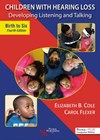
Children with Hearing Loss: Developing Listening and Talking, Birth to Six – Fourth Edition
This book is targeted at a wide audience, from students and healthcare professionals to parents of children with hearing loss. The book is split into two sections: the first section aims to provide the reader with background infomation about hearing...Patient experience of necrotising otitis externa
Necrotising otitis externa is increasing in incidence in the UK and becoming a rising burden to patients and health services. Despite a growing body of literature on this condition, we know very little about patient experience of necrotising otitis externa....Protheses for patients with severe bilateral vestibular loss
In February 2003, I met a patient with severe bilateral vestibular loss due to gentamicin toxicity, and I felt disheartened. Despite the fantastic diagnostic vestibular lab we had at Maastricht University Hospital, what could I truly offer her? She had...Universal newborn hearing screening: a global health perspective
Intuitively, as health professionals, we know that universal newborn hearing screening (UNHS) makes sense. Bolajoko Olusanya outlines how UNHS fits in with global health priorities, as well as illustrating how such programmes can help to deliver additional benefits to communities....
The use of botulinum toxin A to reverse paralysis of the lower lip
The aim of this retrospective case series was to examine the role of botulinum toxin A in paediatric patients with paralysis of the lower lip. Depressor or elevator muscles of the lip (unaffected side) were injected with varying doses of...
How well are we managing epistaxis cases?
Epistaxis constitutes 34.5% of all emergency admissions to otolaryngology departments nation-wide. Presently there are no detailed consensus guidelines for this commonest emergency, and there is tremendous variation of practice. Quite often, non-ENT trained doctors manage this emergency. This paper reviews...
Division of tongue tie helps breast feeding
The need for frenotomy in children with tongue tie is not universally accepted. It is however understood that among other problems, such as impaired speech, tongue tie impedes breast feeding possibly leading to early weaning. Therefore, with recent resurgence of...
“Rhinosweetometry”
An article that elicits a wry smile from the reader is worth drawing attention to particularly in the winter months. This account of brave self-experimentation is unlikely to lead to a future Nobel prize but nonetheless reinforces the important principle...
Surgical indications for infantile haemangiomas
Infantile haemangiomas are embryonal tumours and represent the most common tumour of infancy, with an estimated incidence 4-5%. There is well-described natural history, usually becoming apparent in the first few weeks of life and proliferating rapidly in the first few...
Earlier intervention to correct anosmia?
This is an interesting study aimed to determine the timing for successful surgical intervention in improving the sense of smell in patients with chronic rhinosinusitis with nasal polyps (CRSwNP). A total of 86 CRSwNP patients with loss of smell and...