
You searched for "laryngological"
Pulse synchronous tinnitus
This article reviews the most common neurosurgical causes of pulse synchronous tinnitus. Traditionally, tinnitus has been characterised as subjective vs. objective, or vascular vs. nonvascular. The authors observe that, in some cases, pulsatile tinnitus (PT) is not heard by examiners...
Is benign intracranial hypertension underdiagnosed in patients with spontaneous CSF leaks?
In ENT practice we come across spontaneous CSF leaks. Patients present either as unilateral watery rhinorrhoea or otorrhoea, or sometimes as hearing loss with a watery middle ear effusion. Clinicians, after confirming the diagnosis of CSF leak with beta 2...
How do we manage immune deficiency-related ENT disorders
It is not unusual to come across patients with recurrent sinonasal infections, lung infections and recurrent ear infections needing regular antibiotics in the outpatient setting. Physicians need to have a high index of suspicion that patients may have immune deficiency...General Otolaryngologist to cover sabbatical leave
We are looking for general otolaryngologist to cover sabbatical leave 33 hours per week, from June 2025 – Sept 2025. The role is based at Wellington Regional Hospital, however the successful candidate will be expected to work across the greater...Emma Stapleton honoured in Edinburgh
Otologist Emma Stapleton is among six new members appointed to the College Council of The Royal College of Surgeons of Edinburgh (RCSEd).
A voice as smooth as silk?
A number of materials currently exist for vocal fold injection medialisation. Popular options include calcium hydroxylapatite (CaHA), hyaluronic acid (HA) and polydimethylsiloxane (PDMS). The authors of this paper state that there is an unmet need for an injectable material that...Covid-19 A message from Gareth Smith
Whilst our ENT colleagues have scrambled to the coronavirus ‘call to arms’ and taken the ultimate risk, for many audiologists and audiology services the threat of this global virus presents some different challenges. Whilst social isolation is a scary thought...From Captain Smith to Head of Audiology: congrats on your new mission, Gareth!
Congratulations to our audiology editor, Gareth Smith, on his recent appointment as Head of Audiological Services / Clinical Lead at Mid and South Essex NHS Foundation Trust, where he has served as a consultant clinical scientist since 2011.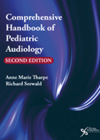
Comprehensive Handbook of Pediatric Audiology – Second Edition
The authors of the Comprehensive Handbook of Pediatric Audiology, as stated themselves, have striven to pen an exhaustive and academic textbook on audiology. In my view, it certainly meets their aim of being at a masters or doctoral level. However,...
Hearing Aid Dispensing Training Manual
The Hearing Aid Dispensing Training Manual is primarily designed to support those sitting their State Hearing Aid Dispensing practical exams in the US. The book is easy to read, comprehensive and logical in its approach to supporting those sitting their...
Self-Assessment of Hearing - Second Edition
As an audiologist, I am often reminded of the estimated number of hearing aids that end up in patients’ drawers, rather than in their ears. Although the reasons for non-compliance with amplification are numerous and complicated, the patients’ reported perspective...


