You searched for "OME"
Sushruta and Indian rhinoplasty
Vijay Pothula explains rhinoplasty’s roots in ancient Indian Ayurvedic medicine, and how it was introduced to the Western world. In 1794 The Gentleman’s Magazine published a surgical operation which was long established in India but unknown in Europe [1]. A...Combined use of a hearing aid and a cochlear implant: a case study
When multi-channel cochlear implants (CIs) were first introduced in the 1980s, their use was restricted to people who derived no benefit from conventional amplification. Over the past three decades, however, the criteria for CIs has been relaxed considerably, and it...
Cognitive Behavioral Therapy for Tinnitus
I was sceptical when I read that Cognitive Behavioral Therapy for Tinnitus was aimed at both clinicians and people with tinnitus. All too often, books intended for such a wide readership end up being too academic to appeal to patients...
Quality of life in adolescence
Adolescence can be a difficult time and the added complexity of a hearing loss can exacerbate feelings during this period. In the literature, there are mixed findings that show while some children with hearing loss score poorly on some aspects...
Gadolinium enhanced MRI and the diagnosis of Ménière’s disease
Despite various criteria applied over the years to diagnose Ménière’s disease since the concept of endolymphatic hydrops was first observed in postmortem examinations of patients in 1938, the diagnosis still remains mainly clinical. To visualise endolymphatic hydrops in MRI imaging,...Conspiring together: tinnitus and hearing loss
In this special feature, Nic Wray of the British Tinnitus Association and Zheng Yen Ng of The Ear Foundation present the results of their report into managing tinnitus for people with hearing loss. In September 2015, the British Tinnitus Association...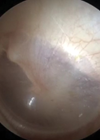
A ‘smarter’ way to examine the ear?
Otoscopes and endoscopes, essential tools for ENTs, audiologists, and general practitioners, are on the receiving end of a modern twist thanks to smartphone technology. Aimed at adapting smartphones for otoscopic and endoscopic imaging, these reimagined devices might just change the...In conversation with AAA President, Jackie Clark
Jackie Clark, PhD, is a clinical audiologist, professor of audiology, and researcher. She is also the new President of the American Academy of Audiology (AAA). While on an annual working trip to South Africa, Jackie answered a few questions about...Feeling like a fraud — imposter syndrome: what it is and what to do about it
Have you ever been plagued by feelings of incompetence despite evidence to the contrary, then this article is for you. Dr Dunay Schmulian provides insight into imposter syndrome and what to do about it. Excerpt 1 Senior Audiologist: That was...
Lockdown has been bad for children, but it might mean they don’t need surgery anymore
Our editor’s choice for this edition reviews an article looking at the effects of lockdown on symptom prevalence in children with adenotonsillar diseases. In this unprecedented COVID-19 era that we are all living and working in, risk assessment has taken...
How can disabled children communicate more during family leisure time?
This article aims to provide guidance on how to integrate alternative augmentative communication (AAC) use into family leisure time. The authors highlight that ensuring the use of AAC in this highly valued activity can maximise carryover to real conversations. The...