You searched for "Innovation"
Measuring client-centred outcomes in audiology: towards a parsimonious solution
From an international driver to the client-centred care model; in this article Anthony Hogan explores outcome measures for individual goal setting and measuring those outcomes. Introduction When people present for hearing help, they are typically looking for solutions to the...Adult hearing screening: consideration for a holistic model
Background Adult-onset hearing impairment is a highly prevalent and undertreated chronic problem that poses a significant burden of disease worldwide [1]. It is usually gradual and diagnosed and managed approximately 10 years after adults have first experienced hearing difficulties [2]....
Management of stage IV pharyngolaryngeal lesions
This is a retrospective study of 63 patients presenting with stage four laryngeal and/or hypopharyngeal squamous cell carcinoma. The aim was to define the factors influencing the oncological and functional outcomes of the patients. All patients had T4 lesions with...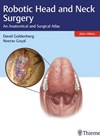
Robotic Head and Neck Surgery: An Anatomical and Surgical Atlas
I was excited to receive and review this book. Unfortunately I was disappointed to discover the strange paperback spirally bound exterior, which the publisher’s website states makes it robust. It looks anything but robust and, as an intended textbook to...The ear-brain connection: the role of cognition in neural speech processing
Audiologists and other hearing healthcare professionals have become increasingly interested in the importance of cognitive function in the assessment and management of hearing loss, especially in light of evidence suggesting a link between hearing loss and cognitive decline in older...
Bilateral medialisation thyroplasty for presbylaryngis
This retrospective case series explores the voice outcomes for 21 patients diagnosed with presbylaryngis who underwent bilateral medialisation thyroplasty at a university medical centre in Portland, Oregon, USA. Silastic was implanted in 17 patients; hydroxyapatite in four. Significant improvements were...In conversation with Nick Jones
“I admit to having felt vulnerable and anxious about exposing my work to scrutiny, and I still do.” From nasal reconstruction to poetry composition: retired rhinologist, Nick Jones - author of new poetry collection, Encounter - tells us more about...
On-call ENT apps
ENT apps for trainees are few and far between. Here are a couple of them which could be useful for the on-call. ENTSHO.com Born out of the website with the same name, this app is a must-have if you work...Audiological approach to treatment of blast-induced tinnitus
Hearing loss and tinnitus resulting from blast waves in the war zone is becoming more common in our clinics. Hamid Jalilvand based in Tehran, shares his experience in audiological rehabilitation and research findings on patients in his clinics with a...
A ‘smarter’ way to examine the ear?
Otoscopes and endoscopes, essential tools for ENTs, audiologists, and general practitioners, are on the receiving end of a modern twist thanks to smartphone technology. Aimed at adapting smartphones for otoscopic and endoscopic imaging, these reimagined devices might just change the...An overview of human factors in ENT and anaesthesia
James Bates and Chris Frerk are both passionate about how human factors science can improve safety in healthcare and have co-authored this article describing how communication, ergonomics and other non-technical skills are making operating theatres safer. There is no doubt...