You searched for "Laryngology"
Genetic research on hereditary hearing loss and clinical application in the Chinese population
Congenital deafness in China affects more people than the entire population of Australia. Prof Wang give us a comprehensive insight into one of the main congenital disabilities in China, looking into the causes of deafness and the benefits of genetic...Harnessing social networks - connecting the global paediatric ENT community
Hannah Burns radiates enthusiasm and commitment to improving communications across geographical and political boundaries. When the pandemic hit in 2020, she took to social media to share her thoughts and offered a forum for colleagues. In the midst of the...Voice analysis
Traditionally voice analysis has been done by ear at a subjective auditory-perceptual level. The three main characteristics of voice are: pitch – normal for age and gender, too high or too low; loudness – normal, too high or too low;...KTP laser in the office
KTP laser surgery offers a new way of selectively targeting microvasculature within laryngeal lesions and leaving normal surrounding tissues like epithelium and lamina propria intact – and thus preserving physiological phonation. This kind of selective photoangiolysis can be performed in...ENT bodies stand up for Ukraine
Leading ENT and audiology organisations have made a stand against Russia’s war in Ukraine.ENT in this issue...BACO 2020
Emma Stapleton, MBChB, FRCS (ORL-HNS), Consultant Otolaryngologist, Cochlear Implant and Skull Base Surgeon, Manchester Royal Infirmary, UK. E: emmastapleton@doctors.org.uk Twitter: @otolaryngolofox Are you going to BACO?” was the question on everyone’s lips. The year was 2006, I was a junior...From the editor MarApr 2021
Declan Costello, MA, MBBS, FRCS(ORL-HNS), Editor, ENT & Audiology News; Consultant Ear, Nose and Throat Surgeon, Wexham Park Hospital, Slough, Berkshire, UK. E: d.costello@nhs.net Over the last 12 months, we have all been through different phases in our attitude to...ENT in this issue...Global Ear and Hearing
GUEST SECTION EDITORS Prof Mahmood F Bhutta, DPhil FRCS (ORL-HNS), Consultant and Honorary Professor in ENT Surgery, University Hospitals Sussex and Brighton & Sussex Medical School, UK. E: m.bhutta@doctors.org.uk Prof Jackie L Clark, MS, PhD, Clinical Professor, Behavioral & Brain...ENT In this issue...Robotics in Head and Neck Surgery
Robotic surgery is here to stay. Within the specialty of otolaryngology, robotics has made headway across all of the subspecialties, although some advances may still be at the pre-clinical stage. The clinical applications are most acutely evident in the practice of head and neck cancer surgery, specifically transoral robotic surgery (TORS).From the editor MayJun 2022
Declan Costello, MA, MBBS, FRCS(ORL-HNS), Editor, ENT & Audiology News; Consultant Ear, Nose and Throat Surgeon, Wexham Park Hospital, Slough, Berkshire, UK. E: d.costello@nhs.net The horrifying situation in Ukraine has drawn international condemnation of the Russian government; as a consequence,...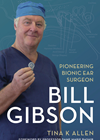
Bill Gibson: Pioneering Bionic Ear Surgeon
Professor Bill Gibson is one of the great pioneers of inner ear surgery and the recent publication of his biography is a reflection of his remarkable life and career. Bill Gibson: Pioneering Bionic Ear Surgeon will be enjoyed by everyone...