You searched for "silence"
Cognition and hearing – you can’t test one with the other!
Cognitive Psychologist, Boaz M Ben-David, provides insights into the import of considering cognitive factors when assessing speech perception ability to maximise intervention success. Failing to do so, he suggests, is “ageist”, a predisposition healthcare professionals must avoid. Cognitive performance is...What happens to donated hearing aids?
According to the WHO, only 3% of people in developing countries who require hearing aids have one. Over the years many people, organisations and companies have donated old hearing aids to charities. Bhavisha Parmar, an audiologist who volunteered with Sound...ENT in this issue...The Future of ENT (Mar/Apr19)
Chris CoulsonENT Surgeon; Managing Director of endoscope-i E: chris@endoscope-i.com The future, predict it at your peril’, said me – just now. But despite this (rather late) warning, we have managed to commission five articles from futurists within our midst. The...
Introduction to Aural Rehabilitation – Second Edition
The second edition of Raymond Hull’s ‘Introduction to Aural Rehabilitation’ does exactly what it sets out to do, that is to provide a very solid foundation for guiding clinical services in the field of aural rehab. The book is written...
ENT Masterclass®: Cyber Textbook of Operative Surgery - 5th Edition
The fifth edition of Cyber Textbook of Operative Surgery by ENT Masterclass has been a game changer. It is probably the world’s largest ‘virtual library’ of ENT surgical videos with over 540 videos of ‘surgical masters’ from International Centres of...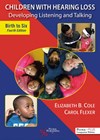
Children with Hearing Loss: Developing Listening and Talking, Birth to Six – Fourth Edition
This book is targeted at a wide audience, from students and healthcare professionals to parents of children with hearing loss. The book is split into two sections: the first section aims to provide the reader with background infomation about hearing...
How can disabled children communicate more during family leisure time?
This article aims to provide guidance on how to integrate alternative augmentative communication (AAC) use into family leisure time. The authors highlight that ensuring the use of AAC in this highly valued activity can maximise carryover to real conversations. The...
Concussion and vestibular processing deficits
It is well known that patients with mild traumatic brain injury (mTBI), also referred to as concussion, display longstanding vestibular symptoms but often clinical signs and objective vestibular function test abnormalities are lacking. The aim of the study was to...
How effective is vestibular rehabilitation in bilateral vestibular failure?
In patients with bilateral vestibular hypofunction (BVH), the outcome of vestibular rehabilitation is mixed. The aim of the study was to identify factors associated with outcome of vestibular rehabilitation (VR) in patients with BVH. A retrospective case notes review identified...
Consequences of Meniere’s Tumarkin crises
Many will be familiar with reports of frightening drop attacks without loss of consciousness experienced by some Meniere’s disease (MD) patients. This study analysed data from an electronic survey of over 600 members of a national Meniere’s society. The aim...
Association between Meniere’s disease and vestibular migraine
Meniere’s disease (MD) and vestibular migraine (VM) are two conditions with overlap in their symptoms. There is often a lack of understanding regarding symptom-based differentiation between them. MD presents with episodic vertigo, fluctuating hearing loss and tinnitus. MD has been...