You searched for "ear"
Otolaryngologists and audiologists are invited to learn about and lead efforts to reduce the global burden of hearing loss
IFOS promises to be a multidimensional meeting, with contributions from speakers from all corners of the world covering a huge array of subjects. We hear about how the global health aspects of hearing loss will be covered in the congress....The role of metrics in studies of hearing and cognition
Introduction When perceiving sounds in real-world listening environments, older adults encounter several sources of degradation that can interfere with the perceptual process (Figure 1). Target signals (i.e. the sounds that a listener wants to focus on) have specific acoustic characteristics...Scientific advances in mapping syndromic hearing loss
From more than 22000 genes that we humans have, approximately 3000 genes are associated with human communication. There are tens of syndromes which have been identified to be accompanied by hearing loss. Disorders of almost every organ of the body...Using the Ling-Madell-Hewitt (LMH) Test Battery
Why change a classic? Because of new knowledge and improved technology, of course! Drs Hewitt and Madell present an update to Daniel Ling’s classic speech test. One of Daniel Ling’s legacies is the Ling Six Sound Test which presents six...Celebrating deaf identity through art: the ‘Hearing Care for ALL’ Virtual Gallery Project
Dr Dalia Tsimpida tells us about the art initiative she created in the midst of the pandemic to promote ear and hearing care, and celebrate the vibrant and diverse world of deaf identity. In the face of the COVID-19 pandemic,...Wilde and the foundations of medical epidemiology
William Wilde (father of Oscar) was renowned as an otologist, but less well known for his work in epidemiology. The bedrock of the modern discipline of public health is good data collection, and we hear from our good friend, Ray...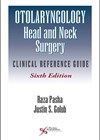
Otolaryngology Head and Neck Surgery: Clinical Reference Guide – Sixth Edition
When I began my ENT training, the revered ‘Pasha’ textbook was one of the first recommendations given to me by senior colleagues who were in the throes of FRCS revision. This revamped edition serves to improve a book which was...In conversation with Miss Romola Dunsmore “ENT training in my day”
Emma Stapleton is an ST8 in Otolaryngology at Doncaster Royal Infirmary, UK. For her first Trainee Matters article, Emma and her colleague, Ruth Capper (Department of Otolaryngology Head and Neck Surgery, Doncaster Royal Infirmary), spoke to 92-year-old ENT surgeon Romola...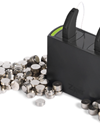
Industry update: rechargeable hearing aid batteries
They may be similar in size to a watch battery, but there is a drastic difference between the frequency with which hearing aid batteries need to be changed compared to the simple watch battery. Unlike a watch battery, which may...Securing the future of ENT in the UK
A career in otolaryngology is fascinating, fulfilling and fun, but how do we convince our potential successors? Jay Doshi, Asad Qayyum, Bradley Storey and Tom Milner outline the fantastic efforts to showcase ENT throughout the UK. Student and foundation doctors...Cambodian Otology Fellowship report
Further to a Humanitarian News article published in the November/December 2014 issue of ENT and Audiology News (see article here), this is a report of Charlie Huins’ six-month experience as the first ENT Fellow at the Children’s Surgical Centre (CSC),...