You searched for "outcome"
Experience on the front line
21st January 2021 Back to basics Yesterday I went right back to where my medical career began. I grew up in Germany, bilingual. A prerequisite to studying medicine in Germany is that applicants have to spend two months working as...Innovating around access to hearing services during the pandemic
COVID-19 has also presented its challenges to hearing healthcare providers and to the industry and, similarly, called for innovation and creativity. Dr Bromwich describes how these sectors are rising to the challenge. The reality of COVID-19 has been a challenging...The future of treatments for hearing and balance: a 15 and 50-year perspective
Jameel Muzaffar and Manohar Bance paint a picture of what otology will look like 15 and 50 years’ time. Will we still need doctors? Will there still be an ENT news journal? The last 50 years have seen advances including...Robotics in rhinology – fantasy or the future?
Robotic surgery is advancing, but its use in rhinology lags due to spatial constraints and high costs. Innovations in flexible robots may bridge this gap in the future. We are in a new era, one of artificial intelligence and robotics....ENT in this issue...Multidisciplinary Teams
Joanne Rimmer, MBBS, MA(Hons) Cantab, FRCS(ORL-HNS), FRACS, Consultant Otolaryngologist / Rhinologist, Monash Health; Honorary Senior Lecturer, Department of Surgery, Monash University, Melbourne, Australia. E: rimmer.joanne@gmail.com The multidisciplinary team (MDT) has long been regarded as the gold standard in cancer care,...Audiology in this issue...Age-related Hearing Loss and Dementia
GUEST SECTION EDITOR Barbara E Weinstein, PhD, Professor and Founding Executive Officer Health Sciences Doctoral Programs, Graduate Center, CUNY, Adjunct Assistant Professor of Medicine, NYU Langone Medical Center, New York, USA. E: bweinstein@gc.cuny.edu The prevalence of dementia is escalating worldwide,...ENT & Audiology in this issue...The Outer Ear
Emma Stapleton, MBChB, FRCS (ORL-HNS), Consultant Otolaryngologist, Cochlear Implant and Skull Base Surgeon, Manchester Royal Infirmary, UK. E: emmastapleton@doctors.org.ukTwitter: @otolaryngolofox Priya Carling, AuD,Director and Consultant Audiologist,Kent Hearing Ltd, UK. E: priya@Kenthearing.com The outer ear is, we think, the unsung hero...Sound Sensation music festival
Alex Griffiths-Brown heads to Austria to hear MED-EL showcasing music by and for hearing implant users.Monika Matusiak given associate professorship by World Hearing Centre
The World Hearing Centre of the Institute of Physiology and Pathology of Hearing, Warsaw, Poland is now eligible to award an academic degree and the first nominee to receive such promotion is Dr Monika Matusiak.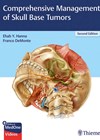
Comprehensive Management of Skull Base Tumors – Second Edition
This is the second edition of a multi-author textbook first published over a decade ago. Most of the chapter authors are North American, as are the editors themselves. There is also a smattering of well-known contributors from the rest of...
Is there increased cardiovascular risk with macrolide antibiotics?
This month’s Ed’s Choice delightfully reviews the potential cardiovascular consequences of long-term macrolide use in the treatment of chronic rhinosinusitis. This used to be one of my ‘go-to’ topics of conversation at home after a bad day at work, although...