

Audiology features

Cochlear implantation and identity in Deaf families
Cochlear implants are one of ENT’s great success stories. But for some families, the decision to implant is far more complex than audiology alone. When we talk about cochlear implantation, we often lead with the science. Candidacy criteria, age at...

How sight shapes sound: cross-modal plasticity and cochlear implantation
Visual cues support auditory recovery after cochlear implantation, with evidence showing cross-modal plasticity enhances speech perception and rehabilitation outcomes. Traditionally, clinical guidance around cochlear implantation has been shaped by a key concern: that reliance on visual communication, particularly speechreading, might...

Smart cochlear device: how biosensors could revolutionise hearing care
Smart cochlear implants could monitor inner ear health, deliver drugs and adapt in real time, merging biosensing, microfluidics and personalised hearing care. From passive hearing aids to smart implants Hearing technology has advanced dramatically over the last few decades, yet...

Transforming adult hearing care: ANZ launches regional Living Guidelines for Adult Cochlear Implantation
Australia and New Zealand launch the first regional Living Guidelines for Adult Cochlear Implantation, setting a unified, evidence-informed framework to improve access, consistency and outcomes. The Australia and New Zealand Hearing Health Collaborative (ANZ HHC) has unveiled Living Guidelines for...

The first nine months: why early hearing matters more than ever
Why 1-3-6 and 9? They are arguably crucial intervention stages. Here, new science is explored which weaves together the threads of early intervention. Imagine a newborn gazing at their caregiver’s face, hearing their voice and feeling the rhythm of their...

The Apple effect: could Apple’s involvement redefine the future of hearing aid technology?
As Apple enters hearing health, this article explores how its tech may reduce stigma and reshape hearing care, without replacing clinical expertise. As hearing health professionals, we are all acutely aware of the gap between prevalence of hearing loss and...

Enhancing care for adults with auditory neuropathy spectrum disorder
It’s time to improve and personalise care for adults with ANSD. Knowing the lesion site could open up treatment opportunities like cochlear implants or new cell therapies. Auditory neuropathy spectrum disorder (ANSD) comprises a group of hearing disorders characterised by...

OBITUARY: Remembering Thomas J Balkany 1948 - 2025
Helen Cullington, our Specialty Editor – Audiology (implantables), pays tribute to a pioneer. Back in 1996 – having worked as a cochlear implant audiologist for three years in the UK – I felt ready for a new challenge. I faxed(!)...

Big data and the future of cochlear implant aftercare
With a million people using cochlear implants worldwide, the time is right for us to harness this vast data for patient benefit. Every day, cochlear implant (CI) processors quietly collect data: how long they’re worn, how often users switch programs...

Lights, camera, hearing: cinema as a catalyst for cochlear implant awareness
Cinema is reshaping how we see cochlear implants – raising awareness, sparking conversation and showing the power of representation. Cinema wields immense power in shaping societal perceptions and sparking dialogue around medical and social issues. In the realm of hearing...

In conversation with Helen and De Wet in Paris: cochlear implants in the year 2074
The World Congress of Audiology (WCA), held in Paris, France, in September 2024, provided a fantastic opportunity to reconnect with colleagues from around the globe. I took the chance to sit outside in the sunshine with De Wet Swanepoel from...
The history of bone-conduction devices
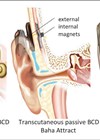
The evolution of bone-conduction hearing devices from the 1400s’ rudimentary designs to today’s advanced models has greatly improved hearing for individuals with conductive or mixed hearing loss. This article delves into the history and technical advancements over the years, as...




