Journal Reviews

Inequitable access to cochlear implantation across the UK
Referral rates and uptake of cochlear implantation in the global adult population are low. Five audiology centres across England and Wales retrospectively explored data over a six-month period in late 2019, post implementation of new National Institute for Health and...
Newborn sensorineural hearing loss – what is the incidence?
In the last two decades, the introduction of newborn screening for hearing loss has dramatically lowered the average age of newborn hearing loss diagnosis to around two to three months of age. The benefits of early diagnosis are manifold, enabling...

Transtympanic plugging for chronic patulous eustachian tube
The authors developed a silicone plug (Kobayashi plug) to manage severe intractable patulous eustachian tube dysfunction (PET). This retrospective study investigates ET function after Kobayashi plug surgery, based on postoperative tympanic membrane (TM) findings and active opening (AO) of the...

When you regret an implant!
Cochlear implants (CIs) offer a solution to hearing loss not helped by conventional hearing aids. CIs help in improving speech recognition scores. While significant, it is not sufficient to provide satisfaction in some implantees. Alignment between expectations and realistic outcomes...
Dizziness questionnaire and telemedicine during Covid pandemic
During the initial phases of the Covid-19 pandemic in 2020, delivery of ENT care adapted significantly. Kaleva et al present their findings of telephone balance consultations during the pandemic with a randomised prospective study utilising a dizziness questionnaire in West...

The decision-making process by parents of children with residual hearing who receive cochlear implants
It can be a difficult decision for parents whose children have residual hearing whether or not to undergo cochlear implantation. Their children may seem to be hearing with their hearing aids, and even in some cases can hear without aids....

Patient-related factors that require revision surgery for otosclerosis
Stapes surgery for otosclerosis has a high success and low complication rate but, over a period of time, good results can deteriorate, requiring revision surgery. In this study, the authors have focused on patients’ demographic data as predictive factors for...
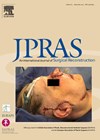
Surgery plus radiotherapy keeps the helical keloid scar away
Keloid scars lead to significant psychological and cosmetic morbidity. As the pinna is a key component of facial cosmesis, pinna keloid scar formation can be aesthetically displeasing. Their stubbornness and high recurrence rate can be challenging to treat. This department,...
Can tympanometry be used to diagnose Ménière’s disease?
The authors proposed multifrequency tympanometry (MFT) as an in-office test which may be able to diagnose Ménière’s disease (MD) that is quicker and more cost-effective than other methods. MFT measures the acoustic admittance of the middle ear and external ear...
Early vs late activation of cochlear implant device
Device activation after cochlear implant surgery was typically performed after wound healing, and varies anytime from three to four weeks after surgery. Nowadays, activation is performed as early as two to three days after surgery. The authors evaluated the effect...
What is in the Fountain of Youth?
Does the auditory system have to age? Can we become more like turtles or jellyfish and keep our internals running without degradation? This essay considers the theoretical underpinnings of biological processes in the cochlear, in particular the role of the...