You searched for "Snoring"

The BAYAD alar technique – visual landmark guided paradigm in alar base reduction
Alar base reduction can be a technically demanding component in rhinoplasty, especially within the ethnically diverse populations where rigid anthropometric norms may not apply. Mahmood introduces the Balanced Aesthetic Yielding of Alar Design (BAYAD) technique – a rulerless intraoperative visual...
How does endoscopic surgery for subglottic stenosis affect voice outcomes?
Patients with subglottic stenosis (SGS) require interventions to improve their breathing and airway patency. Increasingly, these interventions are completed endoscopically but little is known about how endoscopic surgery impacts voice outcomes. The authors of this study completed a systematic review...
International classification of bilateral vestibulopathy (BVP)
In the past few years the Bárány Society have been standardising the diagnostic criteria for various vestibular disorders – International Classification of Vestibular Disorders (ICVD). Diagnosis of BVP relies on history, bedside clinical assessment and objective vestibular tests. The authors...A new approach to workplace hearing conservation
The traditional approach to managing workplace noise has failed - how can we better protect our nation’s hearing using smart hearing protection? Occupational noise-induced hearing loss (ONIHL) is the most common occupational health condition in the world and the most...Body self-image – the ENT perspective
Body dysmorphic disorder is a serious psychiatric condition that we all need to be aware of when contemplating aesthetic surgery. It can present in children as well as adults. Prof Vieira and Dr de Carvalho discuss the tell-tale signs and...SCOTLAND preoperative tympanomastoid CT temporal bone mnemonic system
Learning how to interpret a CT scan of the temporal bones can be a daunting task, especially for a head and neck surgeon like me! However, to make life easier, the authors have devised a useful system to help cover...In conversation with Prof Peter Friedland – Reflections on an extraordinary career and life
Our illustrious friend, Harvey Coates, hears about Professor Friedland’s amazing personal journey, ranging from horrifying exposure to violence through to his clinical care for (and friendship with) Nelson Mandela and his prevailing passion for teaching. Professor Peter Friedland. Professor Peter...Where Art meets Science (and earplugs): a tale of acoustics, aesthetics and audiology
For the fifth cover in the Art meets Science series, we celebrate not only the fusion of audiology and art, but also friendship, nature and the kind of collaboration that reaches far beyond the clinic walls. My colleague and dear...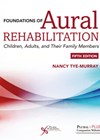
Foundations of Aural Rehabilitation: Children, Adults, and Their Family Members – Fifth Edition
Nancy Tye-Murray leaves no stone unturned in her fifth edition of Foundations of Aural Rehabilitation: Children, Adults and Their Family Members. The exhaustive but not exhausting content offers a three-dimensional insight into the process of (re)habilitation in the clinical setting...ASOHNS Annual Scientific Meeting 2027
For the UK ENT community, the ASOHNS Annual Scientific Meeting 2027 in Adelaide offers a compelling reason to make the journey to Australia. The convener, A/Prof JC Hodge and scientific convener, Prof Alkis Psaltis, have produced more than an international...