
You searched for "trainee"

Superstructure-preserving stapes surgery in otosclerosis
Stapedectomy is a well-established procedure for otosclerosis but it has a small risk of a non-hearing ear, which can be devastating for patients. The development of a procedure which is safer and with a less steep learning curve for junior...
Double suspension sutures for obstructive sleep apnoea
This study examines the benefit of an operation that targets the lateral pharyngeal wall. The double suspension sutures are, in essence, a suture through the palatopharyngeus muscle which is then tied around the hamulus in the retro molar area. This...
Maintaining a voice throughout the MND journey
Amytrophic lateral sclerosis, also known as motor neurone disease (MND), is a progressive neurological disease that destroys the nerve cells responsible for controlling voluntary muscle movements resulting in severe dysarthria in 95% of people with MND. It may lead to...
Socially appropriate part 1: assessing people with TBI
Social communication disorders are one of the most common and yet most under-addressed sequelae of a traumatic brain injury (TBI). Yet speech and language therapists report a lack of assessment tools and a lack of time to fully assess these...
A novel scale for the assessment of tracheoesophageal voice quality – the SToPS
There is currently no assessment tool in widespread use that permits a valid and reliable perceptual assessment of voice quality following laryngectomy. Such a scale is needed to investigate the functional outcomes of surgical voice restoration and rehabilitation regimes. Existing...
Do it like a techy: telepractice in SLT for people with Parkinson’s disease
Parkinson’s disease (PD) is the second most common neurological condition in Australia, and communication difficulties are reported by 90% of people with the condition. Unfortunately, not all people with PD have access to speech and language therapy services due to...
Sarcopenia and dysphagia in older community-dwelling adults
The prevalence of dysphagia in community-dwelling older adults is reported to be around 15%. Outside of common neurological causes such as stroke, Parkinson’s disease and dementia, recent studies have suggested that sarcopenia may be an independent risk factor for the...
Telepractice for the delivery of paediatric feeding services
During the current COVID-19 pandemic, telepractice is being heralded as the safest service delivery mode for the majority of outpatient consultations. Patients are reviewed by their healthcare specialist through video consultations, thus avoiding the need for patients to leave their...
3D-printed temporal bone models - how good can they be?
In the era of increasingly difficult and expensive-to-come-by cadaveric temporal bones with which to practise drilling and learn the complex 3D anatomy of the temporal bone, decent alternatives would be welcome. McMillan et al report a prospective comparison study in...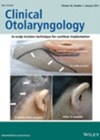
Loss of smell in the age of COVID-19
Loss of smell (LOS) is a debilitating symptom with increasing interest for the medical community due to its high prevalence in COVID-19. In the present paper, a team of 15 experts provide recommendations for the investigation and management of patients...
Telepractice in COVID-19 and beyond
COVID-19 has suddenly forced health professionals to switch from face-to-face to remote video conferencing to deliver many or most of their services. This article considers the current state of this service delivery model (also called telepractice) for speech and language...


