
You searched for "screening"
Genomic testing for deafness and its implications
Gene therapies for hearing loss are rapidly advancing and will be transitioning to clinical practice. Here, the authors explain why clinicians involved in managing these disorders need to be aware of these advances. Genomic testing in England was significantly reconfigured...Reflections on educational gatherings in the COVID era
The COVID pandemic has brought disruption and uncertainty for the organisers of medical conferences. ENT and audiology have always thrived on a healthy exchange of views and the sharing of knowledge across subspecialties and across national boundaries. Ray Clarke asked...Wellbeing – a Scandinavian perspective
The Swedish concept of ‘fika’ is a state of mind and can help to promote wellbeing in teams. But what is it, and how can it help? It is an interesting thought that being well is not the same as...In conversation with British actress and NDCS Ambassador, Rachel Shenton
Rachel Shenton, is a passionate advocate for the Deaf community and people with hearing loss. In this interview she explains why hearing loss is an issue so close to her heart. Rachel Shenton, Actress; Ambassador for the National Deaf Children’s...Hearing Health Today podcast set for return after 4000+ tune in
Popular podcast, Hearing Health Today, returned for a second season after hearing health professionals tuned in more than 4000 times during the first season. The first episode of season two was made available 31 August 2021. Healthcare professionals can listen...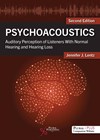
Psychoacoustics: Auditory Perception of Listeners with Normal Hearing and Hearing Loss - Second Edition
Dr Lentz’s Psychoacoustics: Auditory Perception of Listeners with Normal Hearing and Hearing Loss, Second Edition is a 287-page introduction to the eponymous field that fills some (like myself) with great interest, though I have recognised the soporific effect of even...
Use of technological aids and interpretation services
Hearing loss attracts large interest among researchers all over the world due to its prevalence and negative psychological side-effects. Usually hearing loss is managed with hearing aids. However, there are several additional technologies that can be of great help for...
Cochlear implantation in SSD
There are currently several trials for cochlear implantation (CI) in single-sided deafness (SSD) being undertaken to answer some of the questions this paper from New York raises. Who is best suited to receive one? What are their outcomes and how...
Noise’s effect on ageing memory
Working memory is used everyday by individuals of all ages. The authors of this study sought to compare the effect of background noise on the memory of either young adults or middle aged adults. They did this by recruiting 10...
The DOSO outcome measure
The subjective outcome measures are a crucial element of the auditory rehabilitation process for hearing aid fitting. Authors hypothesised that normative data used for the device-orientated subjective outcome (DOSO) were no longer valid for new hearing aids technologies (2015-era technologies)....
Which cross-over frequency is best for electro-acoustic stimulation?
Advances in technology and improved soft surgical techniques have led to individuals with better hearing thresholds, especially at the low frequencies, becoming candidates for cochlear implants (CI). Surgeons are more confident that residual hearing can be preserved thus making those...


