
You searched for "practice"
Radiology of referred otalgia
Otalgia is a common presenting complaint to Ear Nose and Throat Departments. Otalgia is either primary or secondary (referred) [1]. Referred otalgia is a ‘red flag’ symptom and can be a diagnostic challenge for clinicians and radiologists as the pathology...BAAP End Year Symposium on Vestibular Compensation
Dr Sandarva Giri, ST4 Registrar in Audiovestibular Medicine, Lancashire Teaching Hospitals NHS Foundation Trust Dr Sabarinath Vijaykumar, ST5 Registrar in Audiovestibular Medicine, Royal Derby Hospital. Registration opened with participants joining from across the UK and overseas, setting the stage for...Liquid gold – platelet-rich plasma glottic injections in vocal pathology
Platelet-rich plasma (PRP) is being used in an increasing number of ENT conditions, with particular promise in the larynx. Voice is a defining human characteristic. The ability to communicate with one another and to use the vocal folds (VFs) for...Stricture after total laryngectomy: what are the risk factors?
Stricture after total laryngectomy is common but not inevitable. New insights into risk factors could help clinicians anticipate problems and improve swallowing outcomes. Why this complication deserves renewed attention Total laryngectomy remains one of the defining operations in head and...From India to Bonnie Scotland
Not many people know that one of the UK’s first cochlear implant surgeons was Raj Singh, OBE, an Indian immigrant whose passions for otology and technology led him to found the Scottish Cochlear Implant Programme, and the Help to Hear...European Laryngological Society (ELS) meets British Laryngological Association (BLA)
The meeting of the European Laryngological Society in May is being held in London, and is co-hosted by the British Laryngological Association. The President of the ELS, Ricard Simo, and the Secretary of the BLA, Declan Costello, exchanged thoughts about...ENT & Audiology News distributor in Spain, Puntolab Audición, celebrates its first anniversary
Puntolab Audición has a sound room where the sound environments of patients’ daily lives are simulated, and where hearing aids can be fitted more accurately, anticipating any issues that may arise. It could be called a ‘wind tunnel’ for hearing...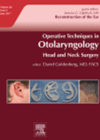
Revising pinna embryology and anatomy
This forms an introductory article for a group of papers discussing the reconstruction of the pinna. It is a succinct yet adequately detailed article that all of us, at whatever stage of our careers should endeavour to read, as it...
‘Close’ surgical margin in oral tongue redefined, 2.3mm is as good as 5mm
Gold standard treatment of squamous cell carcinoma (SCC) of the oral tongue remains surgical resection of the primary tumour with negative margins. The primary goal is the complete excision of the tumour with no residual cancer cells left behind. A...
Do intratympanic injections require local anaesthesia?
Intratympanic injections are becoming increasingly acceptable in the management of Meniere’s disease, tinnitus and sudden hearing loss. This is because they avoid the need for hospitalisation and can be performed as low-cost outpatient procedures. It is traditional to freeze the...


