You searched for "parents"
Lessons learned from running a national thyroid surgery registry
The UK Registry of Endocrine and Thyroid Surgery is now yielding the rewards of meticulous data collection and years of hard work. David Scott-Coombes discusses the advantages and the unintended consequences of their success. The British Association of Endocrine and...
Relationship-Centered Consultation Skills for Audiologists: Remote and In-Person Care
With the rise in tele-audiology services alongside changes in hearing aid technology, there is an added importance in providing our patients with the care they need within our clinical settings and remotely. This book highlights the key skills to be...
Treating keloid scarring with pressure clips following excision: does it work?
Keloid scars can pose a difficult management problem. Whilst not harmful in themselves they can be cosmetically unappealing and lead to social embarrassment and resulting isolation, and following surgical excision they often reoccur. Mechanical pressure is an adjuvant to surgical...
To use or not to use: absorbable sutures for facial wounds
This systematic literature review looked at studies comparing facial skin closure with absorbable versus non-absorbable sutures. Studies not published in English or looking at areas other than the head and neck, and studies focused on suture technique rather than material...
Recording of electrode voltages (REVS) to determine extra-cochlear electrodes
Determining whether electrodes are sitting within the cochlea can be difficult as the checks run by the programming software cannot always determine this. In some cases, patients may be unable to give the audiologist detailed feedback which can complicate the...
Reducing the risk of Frey’s syndrome after parotidectomy – which methods are best?
Gustatory sweating or Frey’s syndrome is a well-recognised complication of parotid surgery. The reported incidence is highly variable, from 4% to 96%, with around 30% of patients reporting symptoms. A number of intraoperative techniques can be used to reduce the...
The push towards scarless parotid surgery
When dealing with benign parotid pathology, high expectations are placed on the operating surgeon to preserve key neurovascular structures, especially the animating facial nerve, through meticulous dissection. With time, there has been a greater emphasis on improving cosmesis in parotid...ENT UK welcomes Amanda Stratford as new CEO
We are delighted to introduce Amanda Stratford as the new CEO of ENT UK. Amanda, who took over from Katie Nurcombe as CEO on 2 January, comes from a health charity and NHS background, with 20 years of charity sector...
Motivational Interviewing for Hearing Care Providers
Motivational Interviewing for Hearing Care Providers is a book about how to shift your communication style from ‘information giver’ to ‘tour guide’ in order to improve patient compliance and health outcomes, using motivational interviewing. Motivational interviewing (MI) is a conversation...She’s On Call - @ShesOnCall
Dr Sujana Chandrasekhar and Dr Marina Kurian began a web show, She’s On Call, that had 5000 views on the first day and has had over 15,000 views after three shows. By the end of March 2020 Emergency departments and, soon, entire hospitals were overwhelmed with very sick COVID-19 patients.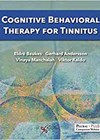
Cognitive Behavioral Therapy for Tinnitus
I was sceptical when I read that Cognitive Behavioral Therapy for Tinnitus was aimed at both clinicians and people with tinnitus. All too often, books intended for such a wide readership end up being too academic to appeal to patients...