
You searched for "communication"
The (Ancient Egyptian) ear that hears badly: otology in Ancient Egypt 1500 BC
The Ebers Papyrus was written around 1500 years before the birth of Christ, and is arguably the most complete and most beautiful of the medical texts to have survived from ancient Egypt. It was purchased from a Coptic antiquarian in...CEORL-HNS Dublin update
There are now only six weeks to the 7th Confederation Congress of European Otorhinolaryngology-Head and Neck Surgery.Leading and managing audiology service through a social enterprise model
As these things sometimes happen, our first conversations about Social Enterprise happened pretty much by chance and in our case were a by-product of discussions about a new department having outgrown the current one. The National Health Service (NHS) Audiology...ENT in this issue...Rhinoplasty
Joanne Rimmer, MBBS, MA(Hons)Cantab, FRCS(ORL‑HNS), Consultant Otolaryngologist / Rhinologist, Monash Health, Melbourne, Australia. E: rimmer.joanne@gmail.com Rhinoplasty may be done purely for aesthetic reasons, as an essential part of a functional septorhinoplasty, or for a combination of both cosmetic and functional...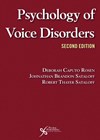
Psychology of Voice Disorders – Second Edition
Whenever I pick up a book, the first thing I do is look at the authors and see if I recognise any. The senior author of this book is Bob Sataloff – he needs no introductions when it comes to...
Is surgery in obese children with obstructive sleep apnoea effective?
The authors present the results of their literature review and meta-analysis of studies examining adenotonsillectomy, uvulopalatopharyngoplasty (UPPP), supraglottoplasty, tongue base surgery or a combination in obese children with obstructive sleep apnoea (OSA). The one study investigating effects of UPPP was...
TIVA in FESS: a meta-analysis
This meta-analysis is from Rochester, New York, and aims to add more evidence for the use of TIVA in endoscopic sinus surgery (FESS) to arm rhinologists keen for a quick, bloodless FESS in the discussion with anaesthetists who prefer inhalation....


