
You searched for "newborn"

363 results found

How neuroimaging has changed our understanding of tinnitus

Brain imaging advances are revealing tinnitus-related neural networks, shedding light on its pathophysiology, heterogeneity and potential therapeutic targets. Tinnitus is a highly common but poorly understood disorder [1]. Its subjective nature and the fact that its treatment may span multiple...
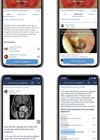


MedShr-ing is caring

MedShr is an international, award-winning medical education platform that has been created for healthcare professionals (HCPs) to discuss, learn, teach, and (to a lesser degree) network with one another. MedShr was founded in 2014 by Cardiologist Dr Asif Qasim and,...

Clinical leadership and management: the ‘Darzi’ experience

The Fellowship in Clinical Leadership programme, more commonly known as the ‘Darzi Fellowship,’ commenced in 2009. It was designed to provide junior doctors at the registrar level with postgraduate training in clinical leadership and change management in order to develop...

Hearing loss and Alport syndrome

Alport syndrome (AS) includes a group of hereditary diseases caused by mutations in the COL4A3, COL4A4 or COL4A5 genes. These genes are responsible for the biosynthesis of α3, α4 and α5 collagen IV chains, which are located in the glomerular...

New technology for call clarity

O2 has carried out a proof-of-concept trial using new technology designed to improve phone calls for customers with hearing loss.

How to identify and support adults with auditory processing disorder: a focus on low-gain devices and auditory training

Some adults struggle with hearing in noise despite normal audiograms. Tools like the HHIA, low-gain devices and auditory training can help identify and support these cases. In this article, Angela Alexander and Fatima Abbas use a case study to discuss...

Machine learning and the future of otolaryngology

If you are over 30 years of age, you have witnessed a technology revolution that has grossly affected how we live: computers have come from being an oddity to an everyday feature in our households and places of work; the...

Trainee-led collaborative research and audit in ENT: where are we now?

In late 2015 INTEGRATE, the UK ENT Trainee Research Network, was formed. Since then, two national projects have been completed and INTEGRATE has grown into a larger, more structured organisation, with otology, head and neck and rhinology subcommittees working alongside...

European funding for the tinnitus research network TINNET

Over 70 million people in Europe experience tinnitus, and for seven million it creates a debilitating condition. Severe tinnitus is often associated with depression, anxiety and insomnia, resulting in an enormous socio-economic impact [1]. It has been estimated that 13...

The use of social media to drive practice growth

Cliff Olson is the most successful user of social media in the hearing care industry as of the date of this publication. His videos have been viewed worldwide, and he has more YouTube followers than all the major hearing aid...

Digital otoscopy with AI diagnostic support: making diagnosis of ear disease more accessible

Following Carolina Leal’s interview with Prof De Wet Swanepoel on the HearScope system, Spotlight on Innovation asked Dr Jenny Nesgaard Pedersen to review the new AI feature in HearScope system’s capabilities. In the last decade, artificial intelligence (AI) and machine...

CI Advocacy in Action 2025

Helen Cullington, Professor of Cochlear Implants at the University of Southampton Auditory Implant Service, UKThe second global CIICA conference took place in Brussels in October. There were delegates from 32 countries, and more than 30 participants with cochlear implants! Live...
