You searched for "Cell"
ASOHNS Annual Scientific Meeting
Dr Bec Anning, SET2 Otolaryngology Trainee, New South Wales, AustraliaThis March, delegates and experts from around the world joined us on the traditional lands of the Gadigal people of the Eora Nation, for the 75th ASOHNS Annual Scientific Meeting. The...7th Annual Congress of the Bulgarian Society of Pediatric Otolaryngology
In February, nearly three hundred delegates gathered in the snow-covered city of Burgas on the Black Sea coast for the 7th annual congress of the Bulgarian Society of Pediatric Otolaryngology3rd ENT Masterclass® World Congress
The 3rd ENT Masterclass World Congress at the Palace of Parliament was a perfect setting to celebrate the 20th Anniversary of ENT Masterclass. Two days of academic excellence saw over 250 delegates and faculty from all across Europe and beyond.Matthew Yung and Chris Raine Travelling Scholarship to Iowa
I was the grateful recipient of the 2020 Matthew Yung and Chris Raine scholarship, although due to the Covid pandemic and its aftermath I could not take up the opportunity until June this year. I chose to visit the otology and neurotology department at Iowa University Hospitals, in particular to meet with Bruce Gantz, an early adopter of bony obliteration of the mastoid, himself inspired by the work of Ulf Mercke of Sweden who developed this technique in the 1980s.The 5th EHNS Workshop on Head and Neck Robotic Surgery
This two-day workshop focuses on the state of the art in head and neck robotic surgery and related technologies, providing a broad overview of current applications, cutting-edge tools and innovations. Led by a panel of leading surgeons and oncologists, it...YCOHNS: over 30 years of supporting the next generation of ENT consultants
The Young Consultants in Otolaryngology and Head and Neck Surgery (YCOHNS) was established over 30 years ago by a group of young ENT consultants including Tony Narula, Alan Johnson and others who all went on to become highly influential members...Global Ambassadors Highlights of the Year
Audiology, Indian Subcontinent, Krishna Yerraguntla Over 466-million people live with disabling hearing loss and global costs of unaddressed hearing loss is 750-billion international dollars. Thus, to alleviate the impact of hearing loss on lives of people, The World Hearing Day...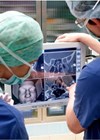
Augmented reality – a quick overview of potential technology
Is that the optic nerve? Where is the carotid? Both questions you would prefer to know the answer to upfront. This article discusses if augmented reality can help us with surgical navigation around the skull base. Although endoscopic skull base...