You searched for "infection"
Measuring the pitch and loudness of tinnitus
Matching the characteristics of tinnitus Many researchers and clinicians have explored the subjective nature of tinnitus by asking people with tinnitus to adjust a sound so that it matches their tinnitus in some way. This can be useful both for...ESPO 2025
Ayla TabaksertOver 1000 paediatric ENT specialists from 68 countries said “Guten tag!” as they convened for the 17th Congress of the European Society of Paediatric Otorhinolaryngology (ESPO 2025) at the International Congress Centre, Stuttgart. In a city known for world-class...EndoAthens
10th World Congress for Endoscopic Surgery of Sinuses, Skull Base, Brain, Spine & OrbitENT UK Foundation summer drinks
Three of the recipients of ENT UK Foundation awards, L–R: Wendy Smith, John Hardman and Manish George, along with Victoria Ward and Nirmal Kumar. The ENT UK Foundation is the philanthropic and fundraising arm of ENT UK that seeks to...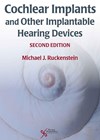
Cochlear Implants and Other Implantable Hearing Devices - Second Edition
This is a detailed resource for hearing-related healthcare professionals. It comprehensively addresses various aspects of cochlear implant care across 22 very readable chapters. Three of these chapters are new in this second edition; including single-sided deafness, auditory neuropathy, and the...
Softband vs. adhesive adapter in children with unilateral microtia and atresia
A bone conduction device is a well-established treatment indicated for patients with unilateral microtia and canal atresia. There are a variety of nonsurgical bone conduction hearing aids (BCHAs) with different coupling methods (softbands/adhesive adapter/spectacles). There appears to be uncertainty of...Temporal bone trauma
Introduction Temporal bone injuries represent one of the more complex management problems presenting to the otolaryngologist. This is largely due to difficulties in assessment and the frequent delays in referral, often as a result of other injuries demanding more immediate...KARL STORZ Introduces the Slimline C-MAC® S: A New Era in Airway Management
The family-owned MedTech company KARL STORZ has announced the worldwide launch of the Slimline C-MAC® S, a single-use video laryngoscope designed to enhance airway management. This innovative tool is built to the same high-quality standards as all products from the...In conversation with Professor Wolfgang Pirsig
Professor Wolfgang Pirsig is a key figure in the field of ENT history and is known for his fascinating discoveries of ENT features in art and historical objects. He kindly agreed to be interviewed for this special history focus by...Military noise induced hearing loss and the Lost Voices report: the evolution of earshot
Brigadier Robin Garnett gives us a snapshot of the 2014 Royal British Legion report on hearing problems of Service personnel and veterans. The difficulties in assessing and managing hearing loss are reiterated in this article, with an introduction to how...