You searched for "audiological"
Global Button Battery Task Force Meeting
The first Global Button Battery Task Force Meeting took place on 17 July 2024 to address ongoing concerns about the dangers of button batteries when accidentally swallowed by children. With their small size and attractive shiny surface, button batteries have...Honour for our Global Ambassador for South America
Our congratulations to Dr Hector Ruiz, ENT & Audiology News’ Global Ambassador for South America and President of the Panamerican Association of ENT-HNS, who has been designated an Honorary Member of the Spanish Society of Otorhinolaryngology.Celebrating female surgeons
A newly-commissioned painting of female surgeons has been added to the portrait collection at the Royal College of Surgeons of Edinburgh (RCSEd). ‘Eleven Surgeons’ by Scottish artist Kirstin Mackinnon features recipients of the Hunter Doig medal, awarded for excellence within the surgical profession.Global Grand Rounds Webinar
Professor Maria Suurna, International Coordinator of the American Academy of Otolaryngology – Head and Neck Surgery Foundation (AAO-HNSF), is hosting a complimentary Global Grand Rounds Webinar on Saturday 26 July, 9.00 – 10.30am.Hearing pioneer Gerard O'Donoghue retires
The Nottingham Auditory Implant Programme (NAIP) has announced the retirement of Professor Gerard O’Donoghue, Consultant Neuro-Otologist at Queen’s Medical Centre, Nottingham. A pioneer in the field of hearing restoration, Gerry’s career has been defined by his groundbreaking work in cochlear implantation.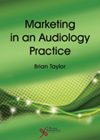
Marketing in an Audiology Practice
“This is not, I repeat, not, a marketing textbook.” A strange, if somewhat bemusing opening to a book with the word ‘Marketing’ firmly placed in its title. The author then goes on to explain why it is not a marketing...
Lockdown has been bad for children, but it might mean they don’t need surgery anymore
Our editor’s choice for this edition reviews an article looking at the effects of lockdown on symptom prevalence in children with adenotonsillar diseases. In this unprecedented COVID-19 era that we are all living and working in, risk assessment has taken...