You searched for "Cancer"
Ida Institute’s legacy and the future of person-centred care
Professor Kris English reflects on the IDA Institute’s closure, celebrating its legacy of advancing patient-centred care and reshaping audiological counselling worldwide. In September 2008, the Ida Institute’s Director, Lise Lotte Bundesen, and her team held its inaugural ‘Defining Hearing Seminar’...Wideband tympanometry: translating complexity into clinical clarity
Clinicians often encounter patients with a Type A tympanogram who still present with conductive hearing loss. Traditional 226 Hz tympanometry has served as a reliable tool in audiology and otolaryngology practices since the 1970s, yet it often misses subtle variations...In Conversation with Professor Shakeel R Saeed - EAONO
The European Academy of Otology and Neuro-otology (EAONO) will hold its 2020 meeting in London. Haroon Saeed, Specialist Trainee in ENT, asked Professor Shakeel Saeed, EAONO President, about the upcoming event. Professor Shakeel Saeed In a nutshell, what is the...From the editor SeptemberOctober 2022
Declan Costello, MA, MBBS, FRCS(ORL-HNS), Editor, ENT & Audiology News; Consultant Ear, Nose and Throat Surgeon, Wexham Park Hospital, Slough, Berkshire, UK. E: d.costello@nhs.net A few weeks ago, the ENT & Audiology News editorial team had a very productive meeting...Sustainable Practice
Guest Section Editor Brian D Westerberg, MD, FRCSC, MHSc, Clinical Professor, University of British Columbia, Canada; Head, Division of Otolaryngology – Head and Neck Surgery, Providence Health Care, Vancouver, Canada. Climate change is the greatest threat to human health today....The Business of Audiology
Brian J Fligor, PhD, PASC, President, Audiologist-in-Chief, Tobias & Battite Hearing Wellness, Boston, Massachusetts, USA. DrBrian@tobias-battite.com When it works well, capitalism is an excellent driver of innovation, generation of wealth, and adherence to best practices resulting in optimal outcomes. When...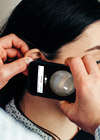
Connecting healthcare
In recent years, there has been a definite shift toward the acceptance and use of smartphone technology in the delivery of healthcare. Within the fields of ENT and audiology, there is considerable appeal in the portability, simplicity, affordability, and connectivity...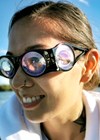
Boarding Glasses: could these unique spectacles be the answer to alleviating motion sickness?
Laurel Palmer is a Toronto-based Audiologist who also suffers from motion sickness. For Tech Reviews, she is testing out Boarding Glasses by Boarding Ring, on the road and at sea, to see if they can give her some relief. Motion...