You searched for "simulator"

Treatment of incus lysis with hydroxyapatite bone cement
Middle ear implants provide a suitable alternative for some patients with a certain degree of sensorineural or mixed hearing loss, not wanting a hearing aid. Vibrant SounBridge® (VSB) middle ear implant (MEI), of Med-El®firm, is one such implant. In this...
Day care or admission for aesthetic nasal surgery?
Day-care surgery is gaining in popularity throughout the surgical specialities due to economical constraints and patient convenience. However this is not without risk and a careful procedure by procedure evaluation should be performed to prove the suitability of this type...
Better Hearing with Cochlear Implants
This soft cover book of 453 pages describes in detail the work undertaken at the Research Triangle Institute (RTI) in North Carolina which has led to many of the designs and theories of speech processing in cochlear implantation. It is...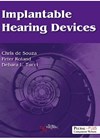
Implantable Hearing Devices
Implantable Hearing Devices is aimed principally at ENT surgeons in training and as a resource for otological surgeons wanting to know more about the devices available. The authors state it is a clear, concise, and comprehensive book offering answers to...
Impaired music perception in children with specific language impairment
This study compares musical skills of children with typical language development with those of children with specific language impairment. Both groups received a test consisting of a melody and a song identification along with a test battery to assess receptive...
CT guided cochlear implant programming improves performance
There is currently no national (UK) consensus on imaging patients for cochlear implantation. This paper may change that. It has shown increased hearing and quality of life in paediatric cochlear implant (CI) users when the programming has been assisted by...
Can intraoperative electrically evoked auditory brainstem responses predict the outcome of cochlear implantation?
Electrophysiology during cochlear implant surgery remains an issue of debate among the various centres. In the present study, the latencies and quality of the eABR waveforms from 74 adult implanted patients were analysed. In addition, four children with severe cochlear...
Marginal gains
Many consider facial nerve monitoring compulsory in parotid surgery yet few do the same for the marginal mandibular nerve in a submandibular approach, even though the nerve is finer and more difficult to identify. Here a group map the nerve...
Avoiding the sweaty cheek
Frey’s syndrome is a common (10-40%) and important complication following parotid surgery. Gustatory sweating during oral stimulation can be embarrassing as it is accompanied by flushing and a sensation of heat. This is as a direct result of regenerated parasympathetic...
CI outcome measures and different languages
Outcome measures for hearing rehabilitation strategies in children are the subject of endless debate. The underlying problem with measuring outcomes in this population is delineating the extent to which development (which is in itself variable) and hearing ability (usually the...
Indication and timing of electrodiagnostic tests in facial palsy
This excellent review describes the benefits and limitations of electrodiagnostic testing for patients with facial paralysis. Tests such as Schirmer, stapedial reflex and electrogustometry have been largely replaced by neurophysiologic tests like nerve excitability test (NET), electroneuronography (ENoG), surface electromyography...