
You searched for "sounds"
Audiologist on the run!
Our best wishes to Barnsley audiologist Rebecca Jenkins who is running the London Marathon in aid of Hearing Dogs for Deaf People. Rebecca and her partner Ashley Drew run Echowell Audiology in Mapplewell and have been training together for the 26.2-mile challenge to raise vital funds and awareness for a cause close to their hearts.
Braci PRO – Alerts for the Hearing Impaired
The honk of a car. An ambulance siren. A fire alarm. The ring of a doorbell. These alerting sounds are used to communicate information of varying levels of importance to us in our homes on a daily basis. Unfortunately this...Developing a telemedical approach to tinnitus treatment for a worldwide market
Most of us have probably met at least one person in our lives who suffers from the notorious ringing in the ear, tinnitus. For many this ringing becomes a nightmare and debilitates them. Tinnitus is defined as the perception of...Wound moisture sensing in traumatic wounds
Wounds can be small and unpleasant, or may be large and life-threatening. The skin is a physical and an immunological barrier to infection, and any defect in the integrity of the skin may enable bacterial or fungal invasion. The successful...UK hears its first Week of Sound
A week of events on the themes of hearing health, the sound environment and musical expression will take place in Edinburgh, Scotland, from 16 to 20 October 2023.A psychophysical perspective on single-sided deafness and its treatment by cochlear implants
Bob Carlyon gives us a psychophysical perspective on the hearing benefits that can and cannot be achieved for patients with single-sided deafness with a cochlear implant, and discusses some of the challenges in maximising the effectiveness of the treatment. He...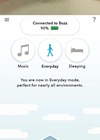
Neosensory Buzz: can a wristband really help with sound awareness and tinnitus?
As an audiologist, I am always looking for alternative and innovative solutions for patients who have tried all other traditional approaches. What else can I offer to patients who struggle to hear, even with appropriate amplification, or those who struggle...


