You searched for "ERS"

CT guided cochlear implant programming improves performance
There is currently no national (UK) consensus on imaging patients for cochlear implantation. This paper may change that. It has shown increased hearing and quality of life in paediatric cochlear implant (CI) users when the programming has been assisted by...
Nasal decongestants don’t improve Eustachian tube function
Prescribing nasal steroids and decongestants. It’s something most of us do routinely, in an effort to reduce chronic middle ear effusion in an adult by trying to improve eustachian tube (ET) patency. This study used clever devices (tube manometry and...
CATE in people with dementia
Behavioural hearing tests may be difficult to perform for people with dementia. The aim of this study was to investigate if the cortical automatic threshold estimation (CATE) may be used as an alternative to the pure tone audiometry test. Six...
Contralateral OAEs in children
Several studies indicate that small changes in the medial olivocochlear (MOC) reflex may possibly be associated with certain pathologies. This could be measured by using contralateral acoustic stimulation (CAS) and observing suppression in otoacoustic emissions (OEAs). The main aim of...
Tympanometry with cochlear implants
Multifrequency and multicomponent tympanometry enables evaluation of minute changes in the middle ear system as well as changes in resonant frequency. Change in resonant frequency would indicate a change in the natural characteristics of the middle ear, such as mass...Loss of smell after COVID-19: a view from the patient forums
Patient advocate, Chrissi Kelly, founder of AbScent, talks about how the pandemic has changed the way we think about smell loss. The high prevalence of chemosensory impairment as a result of the SARS-CoV-2 virus has shone a much-needed spotlight on...Running a post-COVID smell clinic
Over the past year, much of our effort as a speciality has been directed towards crisis management and keeping services afloat. Our practice has changed in untold ways, but unprecedented numbers of patients with smell disorders will increasingly require our...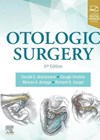
Otologic Surgery - 5th Edition
Otologic Surgery 5th Edition, edited by Derald Brackmann, Clough Shelton, Moises Arriaga and Richard Gurgel, is a textbook masterpiece. The book is written in tribute to the editors’ mentors: Drs Howard House, William House and James Sheehy, whose pioneering work...