You searched for "ageing"

Advanced Caucasian and Mediterranean Rhinoplasty
This is a single author text book written by Peter Lohuis from Utrecht, and therefore differs from the majority of multi-author rhinoplasty texts. The book is essentially therefore a comprehensive ‘how I do it’ from first consultation through to patient...
The Nose – Revision & Reconstruction: A Manual and Casebook
Any nasal plastic surgery book which is recommended in forwards by Eugene Tardy and Claus Walter deserves to be taken seriously, and this does not disappoint. Hans Behrbohm has produced this high-quality book with contributions from eight other authors. The...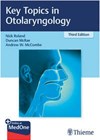
Key topics in Otolaryngology – Third Edition
Eighteen years after the second edition of Key Topics in Otolaryngology, Nick Roland and his co-editors have published the long-awaited third edition. This concise book has been the friend of the examinee for the last two decades within UK and...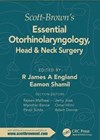
Scott-Brown’s Essential Otorhinolaryngology, Head and Neck Surgery
The three-volume Scott-Brown’s Otorhinolaryngology Head and Neck Surgery is arguably the definitive encyclopaedia of ENT. Its comprehensive nature, however, limits its utility when preparing for examinations. The authors, in creating an “essential” version, have managed to produce an ideal textbook...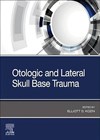
Otologic and Lateral Skull Base Trauma
Otologic and Lateral Skull Base Trauma is a unique textbook that offers the reader a detailed yet efficient overview of all manner of complications following lateral skull base trauma. Whilst the content focuses primarily on neurotological injury, pertinently, it also...
Pharyngocutaneous fistula after total laryngectomy
Pharyngocutaneous fistula (PCF) after total laryngectomy is a serious complication post-surgery, and can lead to prolonged hospitalisation, adding delays in postoperative chemoradiotherapy. This Turkish retrospective study looked at 166 patients who underwent total laryngectomy for laryngeal cancer, although it is...
Budesonide irrigation in polyposis
It is very well known through many RCTs and now meta-analyses that saline-based irrigation is beneficial in patients after sinus surgery. It is also demonstrated that intranasal steroids are beneficial postoperatively but there is also a trend for steroid based...
What do we put in our nasal douches? Anything?
The rise of the popularity of saline nasal douches, with several commercial preparations available, may be a rediscovery of an age-old tradition, but it has been shown to benefit patients. The question then arises as to whether this can be...
Audiometric outcomes following endoscopic stapes surgery
Adding to the evidence base for endoscopic stapes surgery, this systematic review and analysis of outcomes sought to establish the efficacy and safety of this approach. This review included 14 studies with a pooled sample of 314 adult patients. The...
Low-frequency air-bone gaps appear to be a true audiological finding in Ménière’s disease
There is a lack of established objective tests in Ménière’s disease (MD) that can provide information about the disease process. The appearance of low-frequency air-bone gaps (LFABGs) in MD is a recognised but unexplored phenomenon. Two theories have been suggested...
A new idea for olfactory recovery, but not the evidence to support it
Smell training for olfactory loss of all types is a well-recognised treatment, and the typical regimen of rose, clove, lemon and eucalyptus is frequently used. This study looks to compare using eight essences rather than four to see if this...