
You searched for "cortical"
The potential benefits of having supervision in clinical practice
Marie Wardle is the Programme Director of the Interpersonal Therapy department in the West Midlands, UK and part of her role is to deliver supervision training courses for therapists in the region. Therapists, whether supporting patients with psychological or physical...Cytomegalovirus (CMV) and the vestibular system: a case study
This team of audiologists from Cincinnati Children’s Hospital Medical Centre discuss an eight year old with congenital CMV, a neonatal infection which is usually asymptomatic, and provide guidance on how to recognise the signs in the paediatric population, and screen...Does the overuse of noise-cancelling headphones cause APD?
Have you heard the noise around APD? With a flurry of interest around noise-cancellation and APD, Dale Hewitt offers his take on the evidence and theory. When and why did this question first arise? An article was published by BBC...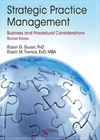
Strategic Practice Management – 2nd Edition
I was very pleased to take on the task of reviewing this book as I support Starkey’s Business Development Partnership Programme set up to support the UK and Irish Independent sector and to encourage audiologists to run their own businesses....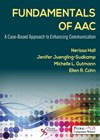
Fundamentals of AAC – A Case-Based Approach to Enhancing Communication
A comprehensive text that will appeal to speech and language therapists at all stages of their careers, from undergraduate through to seasoned professionals working directly in the field. Despite there being 64 contributors (mostly from the US), the editors have...6th East Anglian Sinus, Orbit and Skull Base Surgery Course 2026
Imaging Rhinology / Sinus Skull Base Surgery: Anterior
Grading dysphagia as a toxicity in treating head and neck cancer
Common Terminology Criteria for Adverse Events (CTCAE) is a system used by clinicians to grade the toxicity of oncology treatments in a standardised manner. Dysphagia is perhaps the most common long-term toxicity of head and neck cancer treatment. Currently, a...Hidden genetic disorders in children that may present to the otolaryngologist
Background Among the many hundreds of children presenting to the otolaryngology clinic are a few whose symptoms are due to an underlying genetic condition. In most cases the underlying syndrome is obvious and has already been diagnosed, such as the...
Automated contouring of costal cartilage for pinna reconstruction – a proof of concept
Presently there are limited applications of automation within operative ENT. This proof-of-concept study explores the use of an augmented robot to contour cadaveric costal cartilage for auricular reconstruction. Ordinarily this task is performed manually. This takes considerable time due to...KARL STORZ Strengthens its ENT Portfolio with the Acquisition of AventaMed in Ireland
The family-owned medical technology company KARL STORZ announces the acquisition of 100 percent of the shares of AventaMed DAC, an Irish medical technologies company.


