You searched for "amplification"
Edith Whetnall’s contribution to ENT and audiology 1910-1965
Sue Archbold reviews the fascinating life of Edith Whetnall and traces her influence on audiology from the mid-20th century to today’s practices. It’s a pleasure to be asked to write about Edith Whetnall for this edition of ENT & Audiology...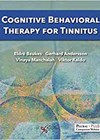
Cognitive Behavioral Therapy for Tinnitus
I was sceptical when I read that Cognitive Behavioral Therapy for Tinnitus was aimed at both clinicians and people with tinnitus. All too often, books intended for such a wide readership end up being too academic to appeal to patients...
Quinsy and culture
Peritonsillar abscesses are frequently encountered in clinical practice. Standard treatment includes empirical medical treatment and drainage. This study aimed at evaluating the value of culture and sensitivity testing of the aspirate in guiding antibiotic treatment. Patients received empirically amoxycillin, amoxycillin...What’s the appetite for clinical risk?
The first Professor and Chair of Medical Professionalism at RCSI and BSHS, Dubhfeasa Slattery provides an overview of how a desire for better healthcare at all levels can be harnessed and nourished, leading to a potential life-long interest in reducing...Making healthcare conferences green
Who knew our healthcare conference industry contributed so much to global carbon emissions? This article summarises means to reduce the impact such that we can continue to meet with our peers for educational meetings and networking, but in a sustainable...Are you ready? How audiologists’ readiness for change relates to the implementation of remote care
Are we ready to deliver remote care? A question many of us have asked ourselves over the last year. Danielle Glista (Associate Professor, Western University) and colleagues talk through a systematic approach to implementing remote audiological care and suggest gaps...
Cough no more?
The challenge of the ‘unexplained chronic cough’ that just will not go away is a challenge that frustrates many of us. Often patients have seen respiratory, upper GI and eventually they see you as the last resort! Is behavioural therapy...
A move away from bony free flaps in reconstruction
Techniques for facial reconstruction have come on in leaps and bounds since the world wars. The use of titanium implants is more recent and the technology for manipulating the metal and how we use it is rapidly developing. Here the...
A modification of the crescentic flap for nasal skin reconstruction
Non-melanoma skin cancers are the most frequent skin tumours and in over 25% of cases affect the nose. Following excision, the reconstruction may be challenging. Reconstruction aims to preserve the anatomical units, nasal functions and also an aesthetic final outcome....
Preserving hearing in NF2 patients
Neurofibromatosis type 2 (NF2) is known to result in bilateral hearing loss, even when there is no significant tumour growth. The cause is postulated to be multifactorial: stretching and compression of the cochlear nerve by the tumour, impairment of labyrinthine...