
You searched for "Ossicular"
Using psychological behaviour change theory in vestibular practice
Fiona Barker explains the importance of recognising and understanding how habitual behaviours in vestibular patients can affect treatment outcomes, and how we as audiologists can support and encourage patients to modify these behaviours and perhaps address our own professional behaviours...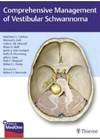
Comprehensive Management of Vestibular Schwannoma
This is the Holy Grail of texts for anyone involved in the management of vestibular schwannoma. Edited by Matthew Carlson from the Mayo Clinic in Rochester, Minnesota, the Associate Editors are from the same department, but the 156 contributors to...
Delayed facial palsy post vestibular schwannoma resection
This article presents findings of a retrospective evaluation of 489 patients who underwent vestibular schwannoma surgery and developed delayed facial palsy. The authors define delayed facial palsy as deterioration of at least two HB grades between postoperative days five and...
Acoustic schwannoma regression post-Gamma Knife treatment
In this retrospective study the authors studied the optimal interval following radiosurgery for differentiating between true growth of tumour versus pseudoprogression using serial volumetric data. A total of 118 patients with a median tumour volume of 0.74cm3 at Gamma Knife...
Hearing outcomes after retrosigmoid resection of smaller vestibular schwannomas are better
The authors reviewed published literature reporting hearing outcomes in patients after retrosigmoid (RS) resection of vestibular schwannoma (VS). Aggregate hearing preservation of 31% and 35% under fixed and random models respectively was observed in the 2034 patients meeting eligibility criteria...
Not to be mis-underestimated
It is a very rare occurrence to find a paper looking at NF2 and the auditory system. There seems to only be a couple on NF2 prevalence in the population, so this is unsurprising. As far as I can recall...
Does topical dual steroid therapy improve vertigo in refractory Ménière’s disease?
This prospective study investigated the role of simultaneous application of methylprednisolone and dexamethasone-soaked gelatin sponge to the endolymphatic sac surface and dexamethasone sponge to the short process of incus in 20 patients with refractory Ménière’s disease (MD) undergoing endolymphatic sac...


