You searched for "cognitive"

Medical trends in sleep disordered breathing
This duo provide an eloquent outline of sleep disordered breathing in general, with particular emphasis on the medical impact and associations of the condition. The increasing prevalence of the condition is described, with increasing worldwide obesity, increased association of cardiac...
Determinants influencing ageing within the vestibular system
The observation that ageing affects vestibular function is not new. However, using a whole population survey, the authors set out to evaluate quantitatively factors responsible for the age-related changes in vestibular function. As part of a national survey on health...An update on button battery safety
ENT surgeons around the world are aware of the huge damage that can be caused by the ingestion of button batteries by young children. Our editor Declan Costello caught up with Professors Fred Dikkers and Tjark Ebels, both at the forefront of the mission for improved safety, to discuss the latest developments of regulation and innovation.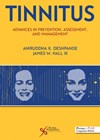
Tinnitus – Advances in Prevention, Assessment, and Management
This is a softcover volume, broken down into six sections over 406 pages printed in greyscale. The book is edited by AK Deshpande and JW Hall III, written by a large number of international experts in the field, and reviewed...
Transtympanic plugging for chronic patulous eustachian tube
The authors developed a silicone plug (Kobayashi plug) to manage severe intractable patulous eustachian tube dysfunction (PET). This retrospective study investigates ET function after Kobayashi plug surgery, based on postoperative tympanic membrane (TM) findings and active opening (AO) of the...Branchio Oto Renal syndrome
Branchio Oto Renal Syndrome (BOR) is an autosomal dominant disorder with branchial, otologic and renal manifestations. The presence of clinical signs varies among and within affected families. Three causative genes for BOR syndrome have been reported thus far: EYA1, SIX1...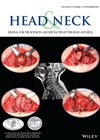
Surviving oropharyngeal squamous cell carcinoma – does subsite matter?
Human papilloma virus (HPV) status is a known prognostic factor in oropharyngeal squamous cell carcinoma (OPSCC). The eighth edition of American Joint Cancer Committee (AJCC) has modified the TNM staging to reflect this. However, subsite as an independent prognostic factor...
REARRANGED: An Opera Singer’s Facial Cancer And Life Transposed
Rearranged is a wonderfully positive memoir telling of Kathleen Watt’s ordeal through maxillary osteosarcoma. As an early career opera singer in the New York Metropolitan Opera’s chorus, her dreams are derailed and life transformed when this most rare diagnosis hits....
The case of the women and the words: intensive therapy can help many years post stroke
Aphasia, a language impairment impacting on a person’s ability to speak, understand, read and write, is most commonly caused by a stroke. Speech and language therapists are trained to work with people with aphasia, often aiming for restitution and rehabilitation...The Collinson Foundation for Patulous Eustachian Tube
The Collinson Foundation for Patulous Eustachian Tube (CFPET) is a US-registered nonprofit organisation dedicated to providing hope, support and advocacy for individuals living with Patulous Eustachian Tube (PET) around the world.