
You searched for "equipment"
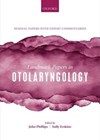
Landmark Papers in Otolaryngology
“It is the supreme art of the teacher to awaken joy in creative expression and knowledge” says Peter Rea in his foreword to this book. He is quoting Albert Einstein, of course, and also introducing this book with a delightfully...A soprano’s demise: a cautionary tale for the thyroid surgeon
Prior to the mid-19th century, thyroid surgery was considered excessively dangerous. The emergence of anaesthetic, antisepsis and improved instrumentation, however, increased its feasibility and frequency in Europe. The unhurried, judiciously antiseptic and haemostatic approach, advocated by Kocher, was popularised and...ENT in this issue...Smell
Chris Potter, MA, FRCS(Eng), FRCS (ORL), Consultant ENT Surgeon, Torbay Hospital, UK. E: potler@doctors.org.uk The lack of attention to olfaction as a cultural experience is hard to explain in world literature. It is even harder to explain when one regards...
Music training for cochlear implant users
The ability to enjoy music is something that is important to most people and contributes to wellbeing, as well as holding cultural significance. However, the speech signal is generally prioritised for those with cochlear implants (and indeed hearing aids). Improving...The modern management of Ménière's disease
In this article, John Phillips considers the evolution of management options for Ménière’s disease. Treatment options past and present are discussed, together with an insight into future developments regarding the role of intratympanic steroids. Ménière's disease can be the source...Marshall Chasin wins Career Award in Audiology
Congratulations to Audiologist Marshall Chasin, the recipient of the 2025 Richard Seewald Career Award. This award, from the Canadian Academy of Audiology, recognises a career in research, clinical practice, teaching and/or mentoring young people.
5-cm incision for neck dissection and free flap reconstruction
Patients with oral cavity squamous cell carcinoma (SCC) will commonly require neck dissection as it is associated with a higher rate of overall and disease free survival. Free flap reconstruction of the defect following surgical resection is considered the gold...


