You searched for "malignant"

Thyroid nodules in children
Whilst 5% of nodules in adults may harbour malignancy it is reported in this review that about a quarter of nodules may do so in children. Malignancies in this group are almost always well-differentiated subtypes of papillary, follicular and medullary...The role of the maxillo-facial surgeon in the management of skull base malignancy
Whilst ablative surgery remains the principal treatment option for head and neck malignancy, the skull base is the last frontier. The complex anatomy, supreme functionality of the brain, and varied pathology provokes many a detailed discussion in the multidisciplinary team...Nuclear heads – and necks
Imaging of the extra-cranial head and neck is challenging due to the anatomic complexity of the region. CT, MRI and ultrasonography (US) are amongst the most frequently utilised radiological modalities in head and neck imaging but do not always provide...
Robotic Head and Neck Surgery: The Essential Guide
This is a very well-written textbook of robotic surgery in the field of head and neck, written by world-renowned specialists. The book covers the topics of training and education and application of robotic surgery in the management of both benign...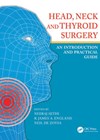
Head, Neck and Thyroid Surgery: An introduction and practical guide
This is an outstanding practical guide to head, neck, thyroid and parathyroid surgery for the trainee starting in the head and neck rotations but also preparing for board college exams such as the MRCS, FRCS or the EBEORL. The authors...
The rise of AI in the head and neck clinic
There has been a huge focus in recent months on the rise of artificial intelligence (AI) in all aspects of modern life, and the head and neck clinic is no exception it appears. This paper builds on previous work to...
Lipofilling for scar improvement
Since Coleman et al. in 1991 reported on lipofilling, numerous applications have been reported; these include but are not limited to contour restoration, lip augmentation, and wrinkle therapy. There has also been some one off reported improvements in scars following...
The unknown primary again
In this retrospective study of 35 patients, the authors followed a systematic protocol for the detection and management of malignant cervical lymph nodes without an apparent primary lesion. Although their one, three and five year survival results are consistent with...
Cheek reconstruction following melanoma excision
Malignant melanoma occurs most commonly on the cheek and thus is usually diagnosed early, and rarely needs large reconstructions for advanced disease. This is a retrospective study looking at 26 patients that had undergone treatment for cheek melanomas between 1996...
Rib grafts for mandibular reconstruction
Reconstruction of the mandible following ablation requires good bone stock to allow optimal function and the placement of dental implants. In the developed world, vascularised bony flaps are accepted as the gold standard but these may not be widely available...
Clinical histopathology of 250 parotidectomy patients
Clinical histopathology of 250 parotidectomy patients This is a retrospective study of 250 consecutive parotidectomy patients at units in Belgium and the Netherlands. The sensitivity and specificity of FNAC was 64% and 99% respectively, the sensitivity being slightly lower than...