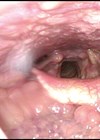
‘That’s a funny looking lesion on the larynx, it’s probably benign, but I should take a biopsy.’ Liz Ross and Ajith George discuss whether virtual chromoendoscopy will change this thought process. What are the origins and ENT applications? Traditional chromoendoscopy...
In today’s world of ever-increasing sound levels, the Plug’em campaign, run by the British Tinnitus Association (BTA), is highlighting the issue of tinnitus caused by loud music in people aged 16-25 years old. The purpose of the campaign is to...
There are successful models for delivering complex ear surgery where resources may be more limited. Ear, nose and throat conditions are frequently overlooked when global health issues are considered, but hearing loss is the world’s most common sensory deficit, and...
Although the da Vinci platform was FDA approved for early-stage oropharyngeal cancers, the indications have expanded. In this article, John Hardman explains how surgeons, with greater understanding of the strengths and limitations of robotic surgery, have systematically set out to...
Emma Watts, a West Midlands ENT Registrar and Digital Fellow, gives a witty and concise recollection of ENT training during COVID, and predicts how hybrid learning may be here to stay. *A zorse is the offspring of a zebra stallion...
3 November 2023
| Sukham Brar, Min Joon Kim, Brian D Westerberg (Prof), Julie E Strychowsky
|
ENTA - General
Although our operating rooms consume significant resources, some simple changes can have considerable impact in reducing greenhouse gas emissions. Here are 10 such simple things we can do. Waste is one of the largest contributors to a hospital’s carbon footprint,...
3 May 2024
| Robert Vincent, Christopher Aldren
|
ENTA - Otology
Chris Aldren speaks to French ear surgeon Robert Vincent who’s particularly proud of forming a global otologist network providing free resources for education and patient care worldwide. Robert Vincent Robert, who have been your otological mentors? I did my initial...
ENT surgery generates significant waste, with single-use instruments and packaging as key contributors. This article outlines recommendations on sustainable practice that can be adopted into ENT departments. Climate change is one of the greatest threats to human health in the...
Have you ever been plagued by feelings of incompetence despite evidence to the contrary, then this article is for you. Dr Dunay Schmulian provides insight into imposter syndrome and what to do about it. Excerpt 1 Senior Audiologist: That was...
Andrej Kral gives us an overview of neuronal plasticity in congenital hearing loss, and discusses why it is core to our clinical interventions in hearing loss and rehabilitation. The brain is born immature and undergoes extensive shaping during early development....
1 July 2019
| Ibrahim Almufarrij, Piers Dawes (Prof), Kevin J Munro (Prof), Michael A Stone, Harvey Dillon (Prof)
|
ENTA - Audiology - Adult
How safe and desirable are direct-to-consumer amplification devices? A team has put a range of devices through their paces and compared them to a standard NHS hearing device. Why do most individuals who would benefit from hearing aids not try...
Should I use omni-directional or fixed directionality? Does it make a difference if I’m fitting a unilateral hearing loss? Mark Laureyns discusses the current evidence on directional microphones and provides practical advice on the systems and when to employ them....