You searched for "Innovation"
Global Grand Rounds Webinar
Professor Maria Suurna, International Coordinator of the American Academy of Otolaryngology – Head and Neck Surgery Foundation (AAO-HNSF), is hosting a complimentary Global Grand Rounds Webinar on Saturday 26 July, 9.00 – 10.30am.
CIs and the elderly
Although cochlear implantation (CI) is thought to be a predominantly paediatric procedure, more and more adults are candidates for cochlear implants. This retrospective study was performed on 80 adults aged above 50 who were implanted for at least nine months....HEAL 2024: Hearing Across the Lifespan
This year around 350 people representing 40 countries attended, with about 290 oral and poster presentations. Special sessions addressed a range of global challenges, including Precision Diagnostics and Therapy Across the Lifespan, Empowering healthcare professionals in supporting older adults with comorbid hearing and cognitive impairment Listening effort and Ecological Momentary Assessment.
Falls and ASL users
A mixed-method pilot study was carried out to assess the cognitive load of sign language among users and, consequently, the possible risk of injurious falls. The study specifically investigated the possible risk of falls due to the simultaneous activity of...How to deliver bad news better
Delivering bad news well takes experience and time. The Ida team recommend the SPIKES protocol; providing structure for relaying bad news, giving confidence to those delivering it, and leaving recipients feeling cared for and informed. It’s among the most distressing...Changing behaviour with a human factors approach
The Francis Report (2013) identified multiple problems relating to the safety culture of Stafford Hospital in the period 2005 – 2009, as well as serious failings in the supervisory and regulatory systems of the NHS. Particular criticism was directed at...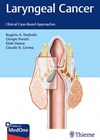
Laryngeal Cancer: Clinical Case-Based Approaches
This book, published by Thieme, provides a lot of information in a compact size. I enjoyed reading the book as it has an international list of authors and contributors from South America, USA, Europe and Asia which gives it an...
Stenting and sinus surgery
Stents are used in sinus surgery with the aim of maintaining patency of sinus cavity avoiding restenosis from inflammation or scarring. The exact indication for stenting in sinus surgery however is still debated. The authors discussed the potential role of...New bone anchored hearing implant reaches clinical milestone
A new implant for bone-conduction hearing, BCI (Bone Conduction Implant), has been developed by Bo Håkansson and his team of researchers at Chalmers University of Technology and Sahlgrenska University Hospital, both in Gothenburg, Sweden. Unlike most bone-conduction devices used today,...Urgent call for surgical supplies in Ukraine
The Russian invasion of Ukraine has caused a major shortage of surgical supplies in hospitals. Irina Gout and Peter Cackett are calling for further relief efforts to provide surgical supplies to under-equipped hospitals in Ukraine.