
You searched for "nasal"
Platelet-rich plasma to reduce post-tonsillectomy haemorrhage and pain
Minimising haemorrhage and promoting healing of raw areas are cornerstones for uneventful and speedy recovery after tonsillectomy. In this single-blinded prospective experimental study, application of platelet-rich plasma to one side tonsillar bed has been compared to the other side in...Transforming adult hearing care: ANZ launches regional Living Guidelines for Adult Cochlear Implantation
Australia and New Zealand launch the first regional Living Guidelines for Adult Cochlear Implantation, setting a unified, evidence-informed framework to improve access, consistency and outcomes. The Australia and New Zealand Hearing Health Collaborative (ANZ HHC) has unveiled Living Guidelines for...GSI releases video series: Closing the Audiology Gap with Automation
Grason-Stadler, a worldwide leader of clinical audiometric systems, hosted a conversation with Dr James W Hall III and Dr Robert Margolis to discuss the current landscape around the patient-provider gap and the essential need for an automated tool.Transoral endoscopic thyroidectomy / parathyroidectomy – a new approach
Historically, scarless surgery has been popular in certain cultures. But is it gaining traction around the world? A UK team tell us more. Background Alternative, remote access approaches to thyroidectomy and parathyroidectomy are increasing in popularity, the newest of these...Global health missions – not just for consultants. A guide for trainees.
Lulu Ritchie is a courageous and driven trainee in London, inspired by humanitarian missions but conscious of the usual requests for consultant level doctors. Lulu didn’t let that hold her back. She found a way and has kindly summarised her...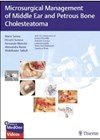
Microsurgical Management of Middle Ear and Petrous Bone Cholesteatoma
Several years ago, after being appointed as a consultant, my esteemed senior colleague entered my office and questioned why I was reading a textbook at that stage of my career, suggesting that I should be focusing solely on journals. Whilst...
Selective otolith dysfunctions objectively verified
Three cases of patients with acute onset vertigo are presented here. The presenting symptoms are described for each case along with the results of vestibular and audiologic examination. This paper focuses on the results of vHIT in the plane of...
Reliability of modified Dix-Hallpike test
Modifications of the Dix-Hallpike (DH) are sometimes necessary when the traditional DH is not feasible. The absence of any formal studies on modified DH was the idea behind this multicentre (three academic centres), prospective, randomised, single blinded and controlled clinical...
How reliable is non-echoplanar diffusion-weighted MRI in picking up postoperative cholesteatoma in children?
Cholesteatoma occurs more often in children than in adults and is more aggressive, often resulting in ossicular erosion and marked conductive loss, amongst other more serious possibilities. Recurrence happens in all three methods used, namely canal wall up, canal wall...
Canal cholesteatoma
This is a retrospective study of patients with external auditory canal cholesteatoma (EACC) managed at a single tertiary centre from 1 January 2010 to 1 January 2021. Ninety patients (100 ears) were included. Mean age at diagnosis was 56+23 years....


